
Colonial Architecture in Mumbai: History, Buildings & Walking Route
The best-known colonial buildings in Mumbai include Chhatrapati Shivaji Maharaj Terminus, Rajabai Clock Tower, the General Post Office, Bombay High Court, David Sassoon Library, the BMC headquarters and the Gateway of India. Most lie in or near South Mumbai’s Fort…
In this guide
- How to understand Mumbai’s colonial architecture
- Landmarks and visitor access at a glance
- 1. Rajabai Clock Tower
- 2. Mumbai General Post Office
- 3. Flora Fountain and Hutatma Chowk
- 4. David Sassoon Library and Reading Room
- 5. Crawford Market
- 6. BMC headquarters
- 7. Afghan Church
- 8. Chhatrapati Shivaji Maharaj Terminus: CSMT
- 9. Gateway of India
- 10. Bombay High Court
- 11. The Taj Mahal Palace
- Ballard Estate and other useful extensions
- A suggested Fort-to-Colaba walking route
- Practical advice for an architecture visit
- Frequently asked questions
The best-known colonial buildings in Mumbai include Chhatrapati Shivaji Maharaj Terminus, Rajabai Clock Tower, the General Post Office, Bombay High Court, David Sassoon Library, the BMC headquarters and the Gateway of India. Most lie in or near South Mumbai’s Fort and Colaba neighbourhoods, making it possible to appreciate several on one carefully planned walk.
Mumbai’s architecture is richer than a single “British style”. Gothic towers, Indo-Saracenic domes, commercial streets and later Art Deco façades tell different stories about the city. This guide explains what to look for, which places suit exterior viewing, and how to connect them without assuming that working offices, courts or libraries allow unrestricted tourist entry. Visitor information and official heritage references were reviewed in October 2026.
How to understand Mumbai’s colonial architecture
The name Bombay appears in the historic records of many of these buildings; Mumbai is the city’s current name. The architecture of the colonial period reflects port commerce, public institutions, religious communities, Indian philanthropy and the work of local craftspeople as well as colonial government. Reading the buildings through those different contributions gives a fuller picture than treating every grand façade as an identical monument to empire.
Victorian Gothic Revival is easiest to recognise through pointed arches, towers, steep roofs and elaborate stonework. Indo-Saracenic buildings draw together elements associated with Indian and Islamic architecture and European planning traditions; domes and arcaded façades are useful features to observe. Art Deco, which belongs to a later phase of the city’s growth, often emphasises geometric patterns and streamlined forms. These are broad ways to begin looking, not a rule that every building fits neatly into one box.
Two UNESCO designations are particularly relevant. Chhatrapati Shivaji Terminus was inscribed in 2004. The Victorian Gothic and Art Deco Ensembles of Mumbai, centred on the relationship between buildings and open space around Oval Maidan, were inscribed in 2018. The BMC headquarters is not independently inscribed as a UNESCO World Heritage Site. Nor should every old building in Fort be described as part of one of these properties.
A useful architectural walk therefore compares streets and neighbourhoods as well as individual landmarks. Pause to notice how a building faces a junction, station forecourt, open ground or harbour. Look at shade, verandas, entrances and the scale of the ground floor. Those details explain how architecture serves a busy tropical city, beyond the striking tower that first catches your eye.
Landmarks and visitor access at a glance
| Landmark | Area / architectural interest | Sensible visitor approach |
|---|---|---|
| Rajabai Clock Tower | University precinct / Gothic tower | View from outside; campus and tower access require checking |
| General Post Office | Near CSMT / Indo-Saracenic dome | Working post office; follow staff directions |
| Flora Fountain | Hutatma Chowk / sculpted civic landmark | View from public space and cross roads carefully |
| David Sassoon Library | Kala Ghoda / Venetian Gothic | Check current visitor and reading-room rules |
| Crawford Market | North of the main Fort walk / market architecture | Add a separate market detour |
| BMC headquarters | Opposite CSMT / monumental civic façade | Exterior viewing or a separately booked authorised tour |
| Afghan Church | Colaba / Gothic church | Check church opening and service arrangements |
| CSMT | Fort / Gothic railway terminus | Public station areas; separate heritage access arrangements |
| Gateway of India | Apollo Bunder / ceremonial harbour arch | Public waterfront, subject to local controls |
| Bombay High Court | Oval Maidan edge / Gothic civic building | Exterior view; respect court security and permissions |
| Taj Mahal Palace | Apollo Bunder / historic hotel | Exterior view; dining or hotel access by arrangement |
1. Rajabai Clock Tower
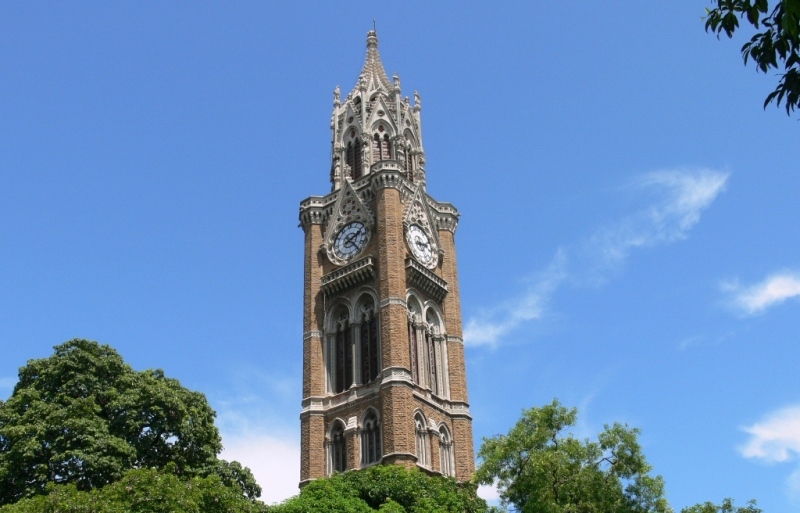
Rajabai Clock Tower is one of the clearest landmarks on the eastern side of Oval Maidan. The University of Mumbai’s heritage documentation records the work of Sir George Gilbert Scott and the building’s completion in 1878. Its association with Indian patronage is an essential part of the story, alongside its Gothic design.
From outside, look at the way the tower rises above the lower university buildings, then notice the arches and carved details rather than taking only a distant skyline photograph. This is a useful place to compare the university precinct with the High Court nearby. The buildings are functional academic spaces, so a view from the public surroundings is the reliable basis for planning. Do not assume you can climb the tower or enter the library without permission.
2. Mumbai General Post Office
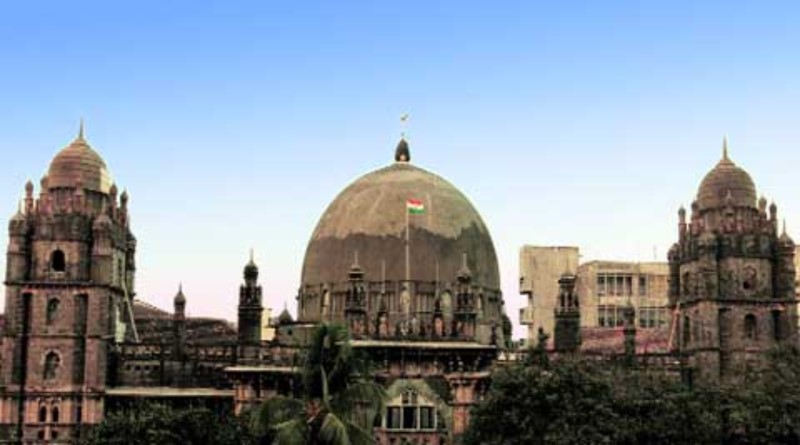
The General Post Office near CSMT provides a striking contrast to the station’s Gothic profile. Its dome and broad composition make it a rewarding stop even on a short architecture walk. India Post’s history of the Bombay GPO identifies John Begg as its architect and records completion in March 1913. A fixed completion year is more useful than an age claim that becomes wrong every year.
This is a working post office, not simply a heritage exhibition. Look at the exterior first, then follow the instructions at the entrance if you wish to enter a public service area. Tourist interest does not provide access to operational spaces. Allow a short stop unless you have separately confirmed an activity inside. It pairs naturally with CSMT and the BMC building; an interior visit should not be assumed when comparing sightseeing itineraries.
3. Flora Fountain and Hutatma Chowk
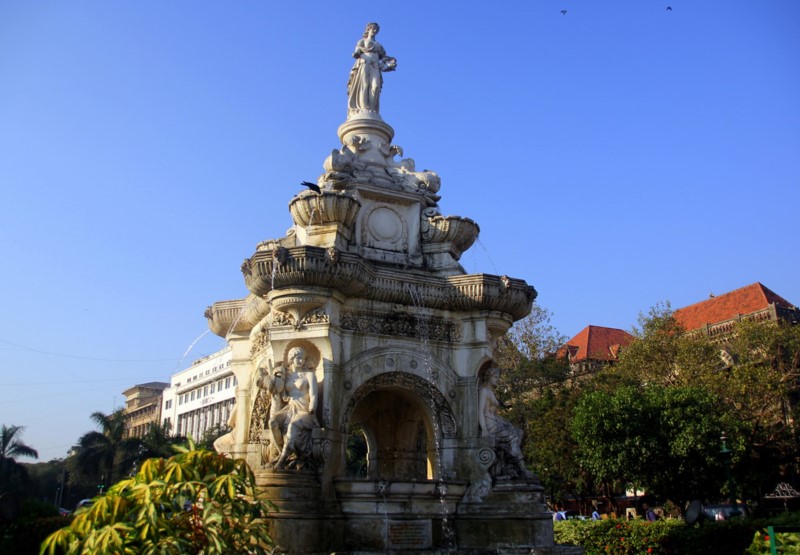
Flora Fountain is a smaller landmark than the great institutional buildings, but it anchors an important point on a Fort walk. Look at the sculptural composition and its relationship to the surrounding streets. The fountain and Hutatma Chowk together also invite a distinction between colonial-era civic design and the later political memory of the place.
Treat this as a stop to observe a public monument, not an invitation to stand in the road for a photograph. Use the appropriate pedestrian crossings and find a viewpoint that keeps the group clear of traffic. The fountain works well between the CSMT end of the walk and the Kala Ghoda or Oval Maidan area. If you have only a short morning, spend a few careful minutes here and keep enough time for the larger buildings nearby.
4. David Sassoon Library and Reading Room
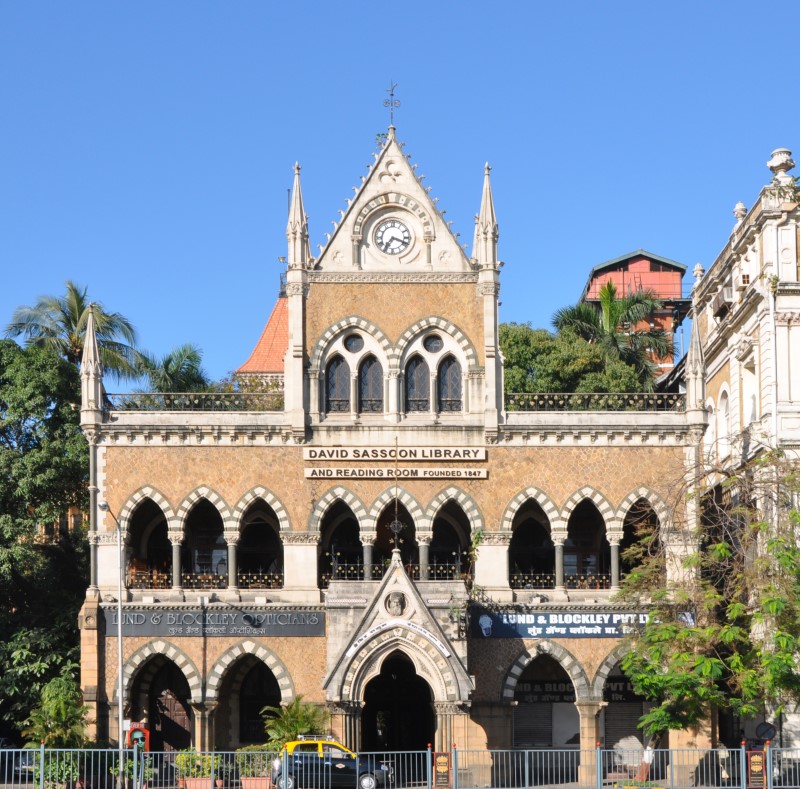
The David Sassoon Library brings the scale of the walk back from monumental towers to a more intimate civic institution. Its own history traces the organisation to 1847 and the completion of its Venetian Gothic building to 1870. The distinction between an institution’s founding and its building date matters when reading heritage signs.
The façade is rewarding from the street, with arches and a compact composition that invite a closer look. Inside, the reading room serves people who come to read and work. Check the library’s current rules before assuming casual sightseeing access, and keep conversation and photography considerate wherever visitors are admitted. It sits comfortably in a Kala Ghoda itinerary alongside nearby galleries and historic buildings, but a café break or gallery visit should be budgeted separately from time spent observing the library.
5. Crawford Market
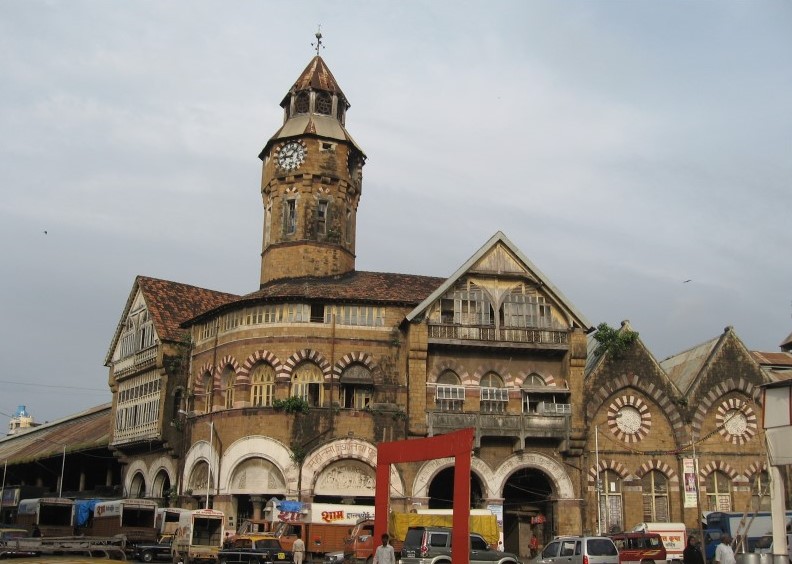
Crawford Market, also known as Mahatma Jyotiba Phule Mandai, adds a different dimension to the city’s heritage: buildings designed around everyday trade rather than ceremonial arrival or government administration. An architecture visit is most interesting when you notice the relationship between the historic structure and the continuing business around it.
It lies north of the CSMT–Kala Ghoda–Gateway sequence, so add it as a deliberate detour rather than pretending it is on a straight southbound walk. Decide whether your priority is a quick exterior look or time inside the market. Those are different commitments. Keep walkways clear, ask before photographing individual sellers and avoid letting the group drift into traffic while looking up at details. If you add a proper market visit, shorten another part of the day instead of making every stop hurried.
6. BMC headquarters
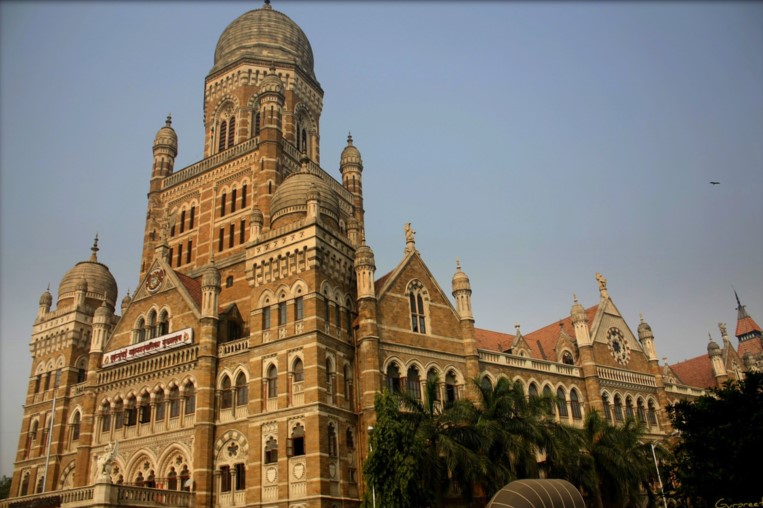
The BMC headquarters faces CSMT, giving you an immediate comparison between two major public buildings at the same junction. Look at its tower, roofline and the way its frontage addresses the station. The setting helps explain why architecture here is also about civic presence, not just decorative detail.
The BMC’s official heritage-tour page describes an authorised tour organised with MTDC. Check that page for the current booking route and availability if you want to see inside. Do not assume the building is open for unscheduled sightseeing or promise an outer-gallery panorama as part of a casual visit. Exterior appreciation is a separate activity from a booked interior tour. Give this junction enough time and use the pedestrian routes carefully; commuters are moving through the same space.
7. Afghan Church
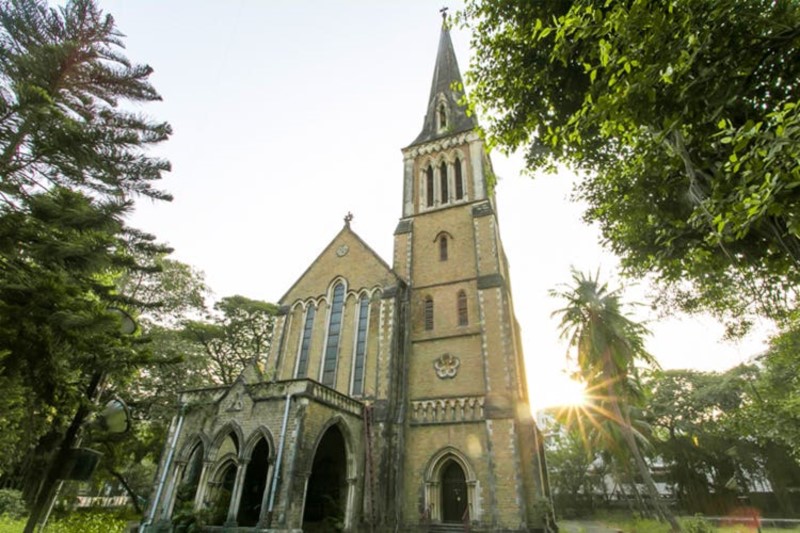
Afghan Church, or the Church of St John the Evangelist, takes the itinerary farther into Colaba. The BMC’s tourist information identifies its memorial association with soldiers of the Sindh and Afghan campaigns. Its Gothic character offers another way to see the architectural vocabulary already encountered in Fort.
This is an active religious place. Check visiting arrangements, respect services and ask before taking photographs inside. The church should be a separate extension to the main route if time allows, not a stop squeezed between distant appointments. A traveller interested in church architecture might choose it over additional shopping or a long café lunch. A group with only two hours in South Mumbai should keep to a tighter circuit and return another day.
8. Chhatrapati Shivaji Maharaj Terminus: CSMT
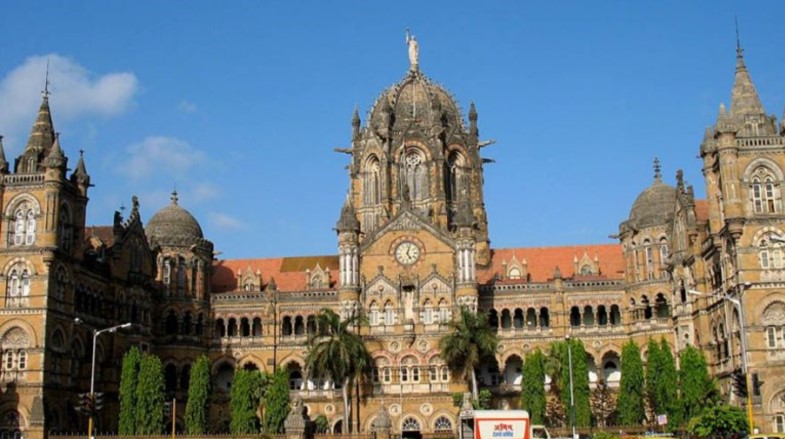
Formerly Victoria Terminus, CSMT is both a major railway station and a World Heritage Site. UNESCO’s official listing credits F. W. Stevens and describes the meeting of Victorian Gothic Revival design with Indian architectural traditions. Look for the dome, turrets, pointed arches and the complex silhouette of the station rather than searching for a single “European” feature.
Its continuing railway use is central to its identity. In public station areas, leave room for passengers and avoid entering restricted spaces. Heritage galleries, administrative interiors or specialist tours require their own current arrangements; a train ticket or an exterior sightseeing stop does not cover everything. For a first view, step back at a suitable public viewpoint to take in the building as a whole. Then compare its scale and detail with the BMC headquarters across the junction.
9. Gateway of India
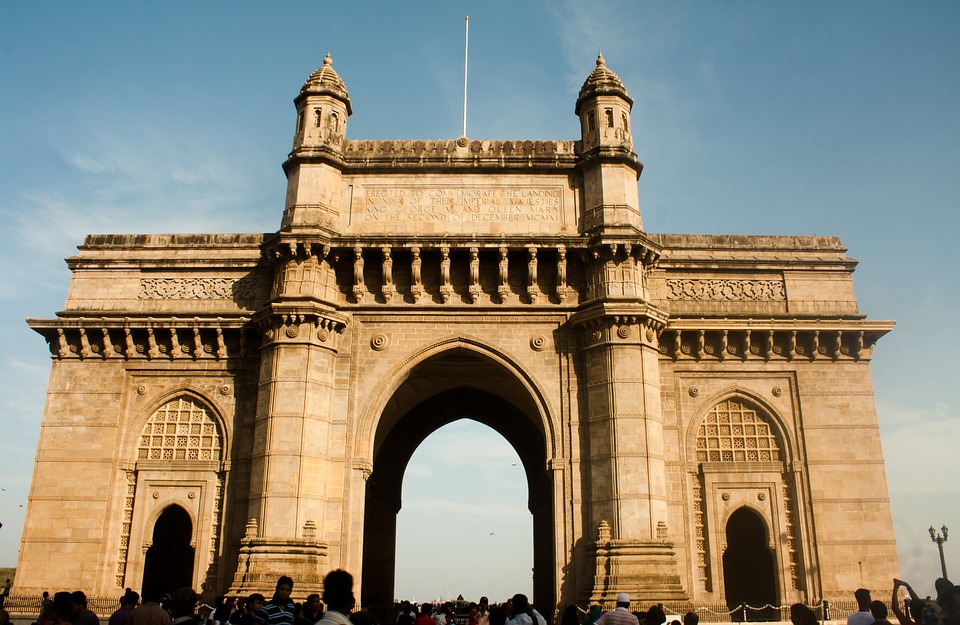
The Gateway of India marks the harbour end of the route. Designed by George Wittet and completed in 1924, it was created to commemorate the visit of King George V and Queen Mary. Incredible India’s official description provides the architectural and historical background.
Observe the arch’s relationship to the waterfront, the open foreground and the Taj Mahal Palace opposite. It is a useful place to discuss the difference between a ceremonial monument and an institution designed for daily work. Allow extra time for crowds and any local security controls. A ferry excursion is a separate activity with its own schedule and weather conditions; do not add it casually to a walking itinerary already filled with building stops. The Gateway itself is the natural ending for a Fort-to-Colaba architecture walk.
10. Bombay High Court
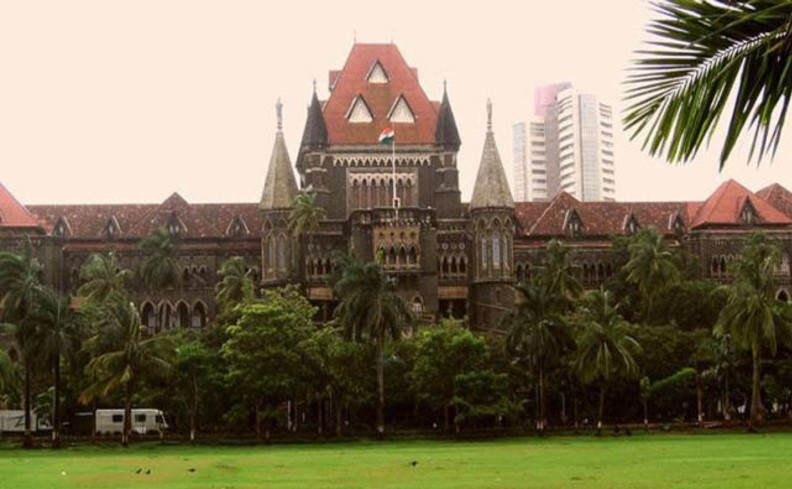
Bombay High Court remains the institution’s official name. Its official architectural history records construction from 1871 to 1878 and the design by Colonel J. A. Fuller. The long Gothic building rewards attention to its proportions as much as its towers.
View the exterior as part of the Oval Maidan section of your walk. Court security, working areas and photography rules must be respected. Any interior access needs specific checking; this is not a monument where casual tourist entry should be presumed. If you are travelling primarily for architecture, the court’s virtual museum is a useful way to read more before visiting. In person, compare the building with the university precinct rather than trying to interrupt its daily functioning to obtain a better photograph.
11. The Taj Mahal Palace
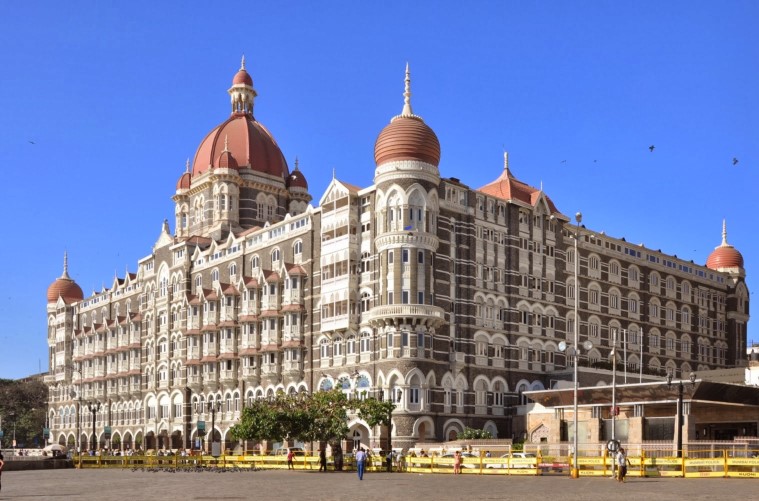
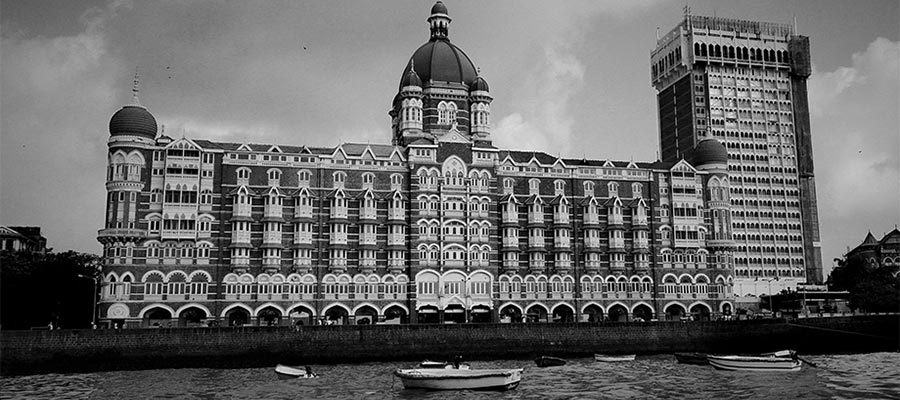
The Taj Mahal Palace belongs to the colonial-era cityscape but its history also reflects Indian enterprise. The Tata Group’s heritage timeline records the hotel opening in December 1903. The building is a strong reminder that the city’s architectural history cannot be reduced to government projects commissioned by colonial rulers.
The exterior is easy to appreciate from the Gateway area. A meal, hotel stay or other confirmed arrangement is a different way to experience it, with the hotel’s own access and security conditions. Do not assume a heritage walk provides unrestricted entry to guest areas. Notice the relationship between the older Palace building and the later tower instead of describing the entire hotel complex as one original structure. If you want an indoor break here, book it as part of your day rather than relying on walk-in availability.
Ballard Estate and other useful extensions
Ballard Estate offers a change from isolated landmarks to a planned commercial streetscape. The Mumbai Port’s historical account explains its creation using material excavated during dock construction and its development as a business centre. Walk here to observe the rhythm of office façades, junctions and street blocks. It should not be described wholesale as an Art Deco district.
Choose this extension if port history and commercial architecture interest you. It works better as an addition around the eastern Fort area than as an afterthought once you have reached deep into Colaba. Many premises are offices, so focus on public streets and respect working entrances.
If you want a more explicit Gothic-versus-Art-Deco comparison, spend extra time around Oval Maidan instead. Look across the open ground and compare the form of the buildings on its different sides. A third option is a gallery or museum stop in Kala Ghoda, but check its own opening day and ticket arrangements. Selecting one extension usually makes the visit more satisfying than adding all of them.
A suggested Fort-to-Colaba walking route
Suggested sequence: CSMT and BMC headquarters → nearby GPO → D. N. Road and Flora Fountain → Oval Maidan views of the High Court and Rajabai Tower → David Sassoon Library and Kala Ghoda → Gateway of India and Taj Mahal Palace. This is a proposed exterior-focused route, not an official tour or a promise of interior entry.
Allow roughly half a day if you want to stop, read, photograph and take a break. Fit travellers can cover the ground faster, but Mumbai’s crossings, heat and crowds make a stopwatch itinerary unhelpful. If you add a booked BMC tour or a museum visit, give it additional time. Crawford Market is a northward detour; Afghan Church is a further Colaba extension. Neither needs to be forced into the core sequence.
For a shorter visit, choose one cluster. CSMT, the BMC exterior and GPO give a compact comparison of public architecture. Oval Maidan, Rajabai Tower, the High Court exterior and Kala Ghoda offer a different walk around institutions and urban space. The Gateway and Taj make the simplest harbour-focused pairing. These shorter options are particularly useful with children or anyone who finds prolonged walking difficult.
If interpretation is your priority, a knowledgeable guide can explain the buildings and the city’s changing names more clearly than a list of photo stops. If transport is your priority, compare the stops offered on Trodly’s Mumbai sightseeing activities. Check whether time at each landmark means exterior viewing, a guided walk or a confirmed interior visit. Tour availability and inclusions belong to the booking page, so use that page for the actual reservation details.
Practical advice for an architecture visit
Start early enough to avoid making the hottest part of the day your longest walking stretch. Carry water, wear comfortable shoes and leave room for a shaded break. In wet weather, reduce the route rather than rushing over slippery surfaces. Choose a meeting point that is easy to find in a busy station or junction area.
Save a map before setting out and keep the building names in both their current and familiar historic forms where relevant. “CSMT” and “Victoria Terminus” may appear in different contexts, while Bombay High Court retains its official institutional name. Knowing this prevents confusion without erasing the history behind the older names.
Photograph from public viewpoints without blocking entrances, commuters or businesses. Ask before photographing people closely or working inside a building. Permission to enter does not necessarily include permission to photograph. Look at heritage buildings as places that still serve the city: that attitude usually leads to a better visit and more considerate photographs.
For a longer Mumbai holiday, keep this architectural day separate from distant attractions and out-of-city excursions. Trodly’s weekend getaways from Mumbai guide can help plan the next stage. Giving each day a clear focus makes the journey more manageable than mixing a Fort walk with a long drive outside the city.
Frequently asked questions
Where can I see British-era buildings in Mumbai?
Start in South Mumbai’s Fort area around CSMT, D. N. Road, Kala Ghoda and Oval Maidan, then continue to the Gateway area in Colaba. The landmarks include public institutions, commercial buildings, a library, churches and a historic hotel.
Are all Mumbai’s colonial buildings Gothic?
No. Gothic Revival is prominent, but the city also has Indo-Saracenic buildings and other architectural traditions. Art Deco belongs to a later development phase. Compare details and neighbourhoods rather than assigning one style to every old building.
Is the BMC building a UNESCO World Heritage Site?
The BMC headquarters is a heritage building, but it is not independently inscribed on the UNESCO World Heritage List. CSMT has its own inscription, while the Victorian Gothic and Art Deco Ensembles form a separate property.
Can tourists enter Rajabai Tower or Bombay High Court?
Do not assume unrestricted entry. The university precinct and court have their own working functions and access controls. Plan an exterior visit unless you have specifically confirmed permission or an authorised visitor arrangement.
How long should I allow for a Mumbai heritage walk?
A half day is a sensible allowance for the main Fort-to-Colaba route with pauses and a break. A shorter visit should cover one cluster. Add time separately for museums, booked interiors, Crawford Market or Afghan Church.
Can I see the Gateway of India and Taj Mahal Palace together?
Yes. They face the same harbour-side area at Apollo Bunder and make a convenient architectural pairing. Viewing the hotel exterior differs from entering its restaurants or guest areas, which follow hotel arrangements and security conditions.
More from Trodly

10 Places in India for an Off-the-Grid Holiday
Ten places to slow down and switch off, with realistic accommodation, connectivity, permission and seasonal route checks…

12 Fun Things To Do in Rajasthan
Rajasthan is the land of the kings and the king’s land will never be out of things to do. From villages to…
14 Things to Do with Kids in and Around Bangalore
Discover 14 things to do with kids in and around Bangalore, from parks and science museums to wildlife and day trips, with…