
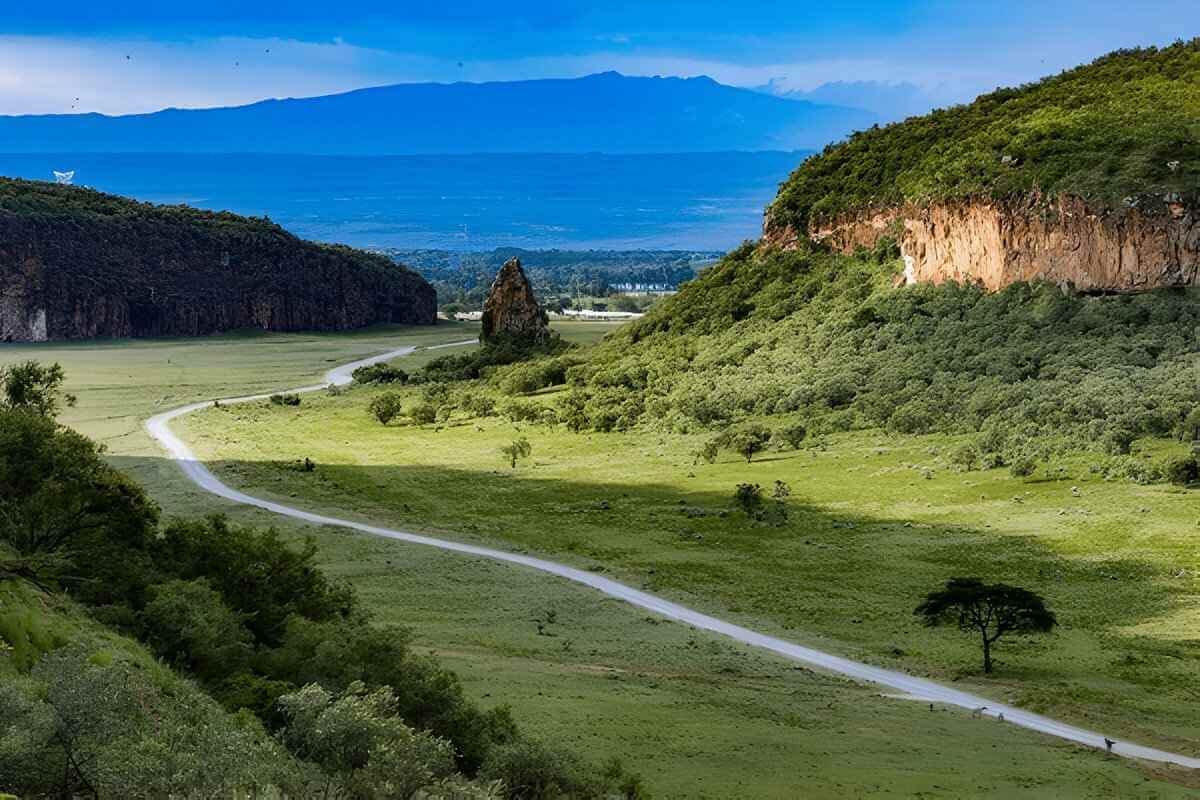
Hell’s Gate National Park: Fees, Cycling & Day-Trip Guide
A practical Hell’s Gate guide covering KWS fees, cycling, permitted walks, wildlife safety and realistic day trips from Nairobi or Naivasha…
In this guide
- What is Hell’s Gate National Park?
- Entrance fees, opening hours and what costs extra
- Choose the right visit: cycling, walking or driving
- Cycling in Hell’s Gate: routes and practical preparation
- Gorge walks and hikes: confirm the route before entering
- Wildlife, photography and responsible behaviour
- Rock climbing and geothermal features
- Getting to Hell’s Gate from Nairobi or Naivasha
- A realistic Hell’s Gate day-trip itinerary
- When to visit, where to stay and what to pack
- Hell’s Gate National Park FAQs
Hell’s Gate National Park near Lake Naivasha is best known for cycling and walking through a dramatic Rift Valley landscape. Plan about half a day in the park, or a full day including travel from Nairobi. Kenya Wildlife Service currently lists non-resident admission at US$50 per adult and US$25 per child; bike hire, activity charges, guides and transfers are additional unless included in your booking. Confirm the permitted route and any gorge restrictions at the gate.
The main decision is how you want to experience the park: an active bicycle outing, a vehicle-based landscape visit, or a permitted guided walk. These choices suit different fitness levels and budgets. A Nairobi day trip is possible, but it should allow meaningful park time and a comfortable return rather than try to fit every Naivasha attraction into one schedule.
This guide covers fees, cycling, conditional gorge access, transport and realistic itineraries. Fee and visitor information checked against Kenya Wildlife Service (KWS) in October 2026. Rates and operating arrangements can change; confirm them for your date before payment.
What is Hell’s Gate National Park?

Hell’s Gate lies in the Great Rift Valley near Lake Naivasha. KWS records its gazettement in 1984 and an area of approximately 68 square kilometres. Cliffs, towers, gorge scenery and geothermal features make the landscape a major reason to visit. It offers an active alternative to spending an entire wildlife day seated in a safari vehicle.
Choose it for scenery, an outdoor outing and the possibility of observing wildlife along permitted routes. It should not be sold as a Big Five safari or as a risk-free place to approach animals. If your priority is large-predator sightings, compare other wildlife destinations. If your group would enjoy cycling beneath cliffs and stopping to observe the valley, Hell’s Gate is a more natural fit.
Entrance fees, opening hours and what costs extra
| KWS visitor category | Adult admission | Child admission |
|---|---|---|
| East Africa Citizen | KES 500 | KES 250 |
| Kenya Resident | KES 675 | KES 350 |
| African Citizen | US$20 | US$10 |
| Non-Resident | US$50 | US$25 |
These are the admission rates displayed on KWS’s Hell’s Gate page when reviewed in October 2026. The category names follow KWS’s published labels. Carry the identification or immigration documents needed to establish eligibility and check the classification at booking. Do not assume that being physically in Kenya, having a tourist visa or holding a hotel booking qualifies you for resident rates.
KWS describes Kenya residents as foreign nationals authorised to reside through a valid permit, pass or permanent residence status. Ask KWS about your particular documentation if the category is unclear. Child eligibility also needs confirmation through the current ticket rules; do not apply an age band copied from an old travel blog.
The park’s published gate hours are 6am to 6pm, with overnight stays subject to the relevant arrangements. Start your activity early enough to return before closing. A late afternoon arrival is a poor choice for a substantial bike ride, especially when bikes need returning and you still have a road transfer afterwards.
Admission is only one part of the budget
Allow separately for applicable KWS activity and vehicle charges, bicycle hire, guide services, transport, meals and optional activities outside the basic park visit. Hiring a bicycle does not automatically include the official cycling charge or admission. Request an itemised total so that a package price and an independent visit can be compared on the same basis.
How to pay and avoid booking confusion
Use the payment link on the official KWS park page and follow the current instructions. If an operator handles admission, confirm the correct visitor category and how the ticket is supplied. Save your receipt and booking details offline. Ask who receives each payment and obtain confirmation of bike return conditions, guide fees and cancellation arrangements before committing.
Choose the right visit: cycling, walking or driving
| Visit style | Why choose it | What to confirm |
|---|---|---|
| Cycling | An active view of the valley and cliffs | Bike condition, helmet, route, activity charge, support and return time |
| Vehicle visit | Less physical effort; landscape and wildlife stops | Vehicle admission, permitted roads and designated areas for leaving the vehicle |
| Guided walk | A closer look at an authorised trail | Current access, route difficulty, guide arrangement and weather restrictions |
| Technical climbing | A specialist activity with an experienced operator | Permission, qualified supervision, equipment and suitable conditions |
| Olkaria spa addition | A separate managed bathing visit | KenGen opening arrangements, admission, transport and total time |
Agree the activity in advance, especially for a mixed group. Someone comfortable on a paved urban cycle path may find a dusty park road more demanding. A vehicle-based visit can be a better choice for travellers with limited mobility or those who prefer to save their energy for a short authorised walk.
Cycling in Hell’s Gate: routes and practical preparation

Cycling is a popular way to experience the main valley, but the surface can be dusty, loose, corrugated or muddy after rain. Some stretches require more effort than photographs suggest. Ask the guide or rental provider to describe the approved route, including the distance in both directions and any climbs. Plan the return journey as carefully as the outward ride.
Do not assume that a quoted “seven-kilometre route” means seven kilometres for the entire visit. Depending on the selected turnaround and access conditions, an out-and-back ride can be considerably longer. Get the day’s actual route from the gate or operator, then choose a shorter turnaround if your group needs one. You do not have to complete the longest available ride to enjoy the park.
Before accepting a rental bike
Test the brakes, gears, tyres, saddle height and steering. Request a correctly fitting helmet and clarify whether the provider carries tools or offers support if a bike fails. Establish where bikes must be returned and what happens if someone cannot finish the route. A clear support arrangement matters more than a small saving on the hire price.
During the ride
Ride at a pace that leaves energy for the return, with frequent water breaks and extra care on loose surfaces. Stay on the authorised road or trail and keep the group within manageable communication distance. Yield to vehicles and animals. Stop well back if wildlife blocks the route; do not use a bicycle to weave through a herd or force animals aside.
How much time should you allow?
Reserve a flexible morning block for the ride, briefing, photo stops and bike return. Ask the operator for a duration that reflects your chosen route and group pace. The time printed on a tour listing may include transfers or other activities, so establish the actual riding time. Keep a buffer for a slower return, a puncture or a change of route.
Gorge walks and hikes: confirm the route before entering
The park’s gorge scenery is a major attraction, but lower-gorge access must be treated as conditional. Confirm directly with KWS or gate staff which routes are open on the day, whether a guide is required and which areas remain restricted. An old itinerary or an offer from a guide does not override an official closure.
Narrow gorges can be hazardous during rainfall and runoff, including when rain is falling elsewhere in the catchment. Follow the day’s restriction rather than judging safety only by the sky overhead. If access is closed or conditions are unsuitable, use an approved alternative trail or viewpoint and keep the park visit focused on the valley and cliffs.
Ask about steps, scrambling, slippery ground, the total distance and the exit before agreeing to a walk. Wear shoes with grip, carry water and keep your hands available for balance. Children and travellers with mobility limitations may need a different route. Do not enter an unapproved side passage to obtain a photograph or continue after the guide or ranger instructs you to turn back.
For booking, ask whether a “gorge walk” is conditional, which route the product intends to use and what replaces it if access is unavailable. A useful itinerary should explain that possibility upfront. The park can still provide an enjoyable outing without promising a lower-gorge walk that may not be permitted on your date.
Wildlife, photography and responsible behaviour

Wildlife viewing can be part of the landscape experience, but walking and cycling require careful behaviour around animals. Observe from a distance, remain quiet and allow a clear escape route. KWS’s published guidance calls for a minimum viewing distance of 20 metres; treat that as a minimum, not an invitation to approach an animal to that exact point.
Buffalo and other large animals can react unpredictably. If animals occupy the road, stop well back, wait or take a ranger-approved alternative. Avoid getting between adults and young. Keep food packed away and do not feed wildlife. A park that permits certain outdoor activities is still a wildlife area, with rules governing where you can leave a vehicle or travel on foot.
For photography, use a zoom lens and stop in a safe place without blocking other visitors. Do not pursue an animal, shout to attract attention or leave the route for a better angle. Landscape photography is rewarding in its own right: cliffs, light and open valley views do not require disturbing wildlife. Follow KWS rules on single-use plastics and carry your rubbish out.
Rock climbing and geothermal features
Climbing is a specialist activity
Rock formations such as Fischer’s Tower attract climbing interest, but a casual park admission should not be treated as permission or preparation for technical climbing. Use an experienced operator, confirm current authorisation and suitable conditions, and require properly fitted equipment and qualified supervision. Beginners should book an appropriate guided session rather than attempt an independent climb or abseil.
Do not bathe in natural geothermal features
Hot water and steam are part of the area’s geology, not a general invitation to touch springs or dip your feet into an unmarked pool. Temperatures can cause serious burns. Stay within authorised visitor areas and follow signs. Industrial and geothermal infrastructure also have access restrictions that a park ticket does not remove.
Olkaria Geothermal Spa is a separate managed visit
For bathing, check the KenGen Olkaria Geothermal Spa rather than entering natural hot-water features. KenGen publishes daily opening from 8am to 5pm. Confirm current admission, permitted pools and transport arrangements. Add it only when the day has enough time, and do not assume spa admission is part of the park or bike ticket.
Getting to Hell’s Gate from Nairobi or Naivasha
KWS’s road directions approach Naivasha from the Nairobi–Nakuru route, then follow Moi South Lake Road towards the park. Elsa Gate is a familiar starting point for cycling outings, but use the entrance specified by your operator and the current permitted activity route. Your hotel, traffic and the selected gate affect the actual journey.
From Nairobi
Allow a substantial early road transfer and a realistic return buffer. A planning allowance of roughly two and a half to three and a half hours each way can be useful, but it is not a guarantee: start location, traffic, road conditions and stops vary. Arrange transport around the park activity, not around the shortest travel estimate shown on a map.
From a Naivasha base
Staying around Naivasha or Moi South Lake Road reduces the pressure of a return trip to Nairobi. Confirm the distance from your particular accommodation to the selected gate; “Lake Naivasha hotel” can describe properties spread across a wide area. Agree a pickup and return plan, especially if you are renting bikes outside the park.
Using public transport
Public transport towards Naivasha does not necessarily take you to the gate or provide an easy ride home after your activity. Establish the last-mile transfer, operating times and return arrangement in advance. Travellers with limited time may find organised transport simpler than joining several uncertain connections on the day.
Compare the Hell’s Gate bike safari from Nairobi or the Hell’s Gate and Lake Naivasha day trip. Review pickup area, visitor-category admission, bikes, guide services and optional boat charges. Product names alone do not establish what is included.
A realistic Hell’s Gate day-trip itinerary
Morning: travel, entry and the main activity
Depart Nairobi early, complete entry and the activity briefing, then spend the morning on your chosen ride or permitted walk. Visitors staying near Naivasha can start with less transfer pressure. Check gorge access before committing to a combined route, and make a shorter valley itinerary your fallback if the group’s pace or weather changes.
Midday: return equipment and have lunch
Return bikes and allow time for a meal, water and a rest. This is also the decision point for any optional afternoon addition. If the main activity took longer than planned, begin the return journey rather than chasing an extra attraction. A tired group benefits more from a comfortable lunch than a rushed sequence of activities.
Afternoon: one optional addition
Choose either a separately booked Lake Naivasha boat outing, the managed geothermal spa, or an unhurried return. Confirm weather, safety arrangements and the time needed for your selection. Combining cycling, a lengthy hike, climbing, the spa and a boat trip creates an overfull Nairobi day. A two-night Naivasha stay gives more flexibility if several experiences matter to you.
When to visit, where to stay and what to pack
A cooler morning generally makes cycling more comfortable. Weather and current access matter more than a promise that one month is always perfect. Rain can change road surfaces and walking permissions; hot days require more water and a slower pace. Weekends and holidays may bring additional visitors. Confirm the forecast and route again shortly before departure.
Choose accommodation according to the time you want to start and the activities you intend to add. Naivasha town and the south-lake area offer different travel distances to the gate. Compare current availability and amenities directly rather than relying on an old shortlist of hotel prices. Camping is subject to designated sites, current KWS permission and applicable charges; do not assume informal overnight camping is permitted anywhere in the park.
Pack sturdy shoes, sun protection, sufficient drinking water in a reusable container, a light rain layer and secure storage for your phone. Keep hands free while riding. Take booking receipts and required identification. For a spa addition, pack suitable swimwear separately. Ask the operator about emergency communication and the support plan before entering a route with limited facilities.
Hell’s Gate National Park FAQs
How much is Hell’s Gate entry for non-residents?
The KWS park page currently lists US$50 for an adult and US$25 for a child, checked in October 2026. Admission is separate from applicable activity charges, bike hire, guides, transport and optional experiences. Verify the current rate before payment.
Is the gorge open?
Access depends on the route, KWS instructions and current conditions. Confirm at the gate for your date. Do not assume a lower-gorge walk is available because it appears in an old itinerary; choose an approved alternative when access is restricted.
Can I visit without cycling?
Yes. Arrange a vehicle-based landscape visit or an authorised guided walk that suits your group. Confirm permitted routes and designated areas for leaving the vehicle. Cycling is an option, not a requirement for enjoying the park.
Is Hell’s Gate suitable for children?
It can be, with an age-appropriate route, suitable equipment, supervision and realistic activity length. Check bike sizes and skills, walking difficulty and transport arrangements. A short vehicle-and-walk plan may suit a family better than a long ride or gorge outing.
Can Hell’s Gate and Lake Naivasha fit in one day from Nairobi?
They can fit when the main park activity is manageable and one lake activity is arranged separately. Allow for travel, lunch and weather. For a more relaxed visit with several additions, stay near Naivasha and spread the activities across two days.
Is the park the same as the geothermal spa?
No. Hell’s Gate is a national park; the Olkaria Geothermal Spa is a separate managed KenGen attraction in the area. Confirm its access and fees independently, and use only the bathing areas that the spa authorises.
More from Trodly
When to Visit Masai Mara for the Best Safari Experience
Discover the best time to visit Masai Mara! Explore seasonal weather patterns for an unforgettable wildlife experience. Plan your adventure today!…
Top Hotels and Safari Lodges to Stay in Kenya
The best hotels and safari lodges to stay in Kenya — from iconic Maasai Mara camps and Kilimanjaro-view lodges to Nairobi's grande…

Top Wildlife Destinations in South India
Look deep into nature, and then you’ll understand everything better, said Albert Einstein. If you have visited even one National Park or…