

Sri Lanka Beach Weather by Month: East, South or West Coast?
Choose a Sri Lanka beach coast by month. Compare east, south and west seasons, plan around monsoons and check forecasts with a practical holiday checklist…
In this guide
- Which Sri Lanka coast should you consider first?
- How do Sri Lanka’s monsoons affect beach planning?
- Sri Lanka beach weather by month: a coast-selection calendar
- South and west: how should you choose a base?
- East coast: choose the beach experience you want
- What changes in April, October and November?
- Which forecasts should you check before a beach day?
- Three ways to build a beach itinerary around the season
- Count usable beach days before adding another stop
- Questions to send your hotel before booking
- Sri Lanka beach-season FAQs
For a Sri Lanka beach holiday, start by comparing coasts with your travel month. December to March is generally a useful starting window for the south and west; May to September often favours the east. March–April and October–November are transitional periods requiring closer checks. These are seasonal planning tendencies, not daily forecasts or assurances that a beach is suitable for swimming.
Choosing the right coastal region can improve a Sri Lanka itinerary more than adding another stop. A holiday built around Galle, a short stay near Colombo and a week around Trincomalee involve different travel commitments. Use the month-by-month table below to shortlist a coast, then test that choice against the actual beach, your activities and the time available.
Sources reviewed on 18 October 2026. The calendar is Trodly’s editorial interpretation of official seasonal information. It contains no invented rainfall measurements, weather probabilities or live sea-condition predictions.
Which Sri Lanka coast should you consider first?
A starting point for choosing a beach region
| Your travel period | First coast to investigate | Before committing |
|---|---|---|
| December–February | South and west | Check the individual beach and current sea outlook |
| March | South and west, with flexibility | Allow for the first intermonsoon |
| April | Compare individual east, south and west options | Prioritise flexible plans and local forecasts |
| May–September | East | Check activities and transfers at your exact base |
| October–November | Choose cautiously using current conditions | Avoid building the whole trip around one sea excursion |
The official tourism weather guide describes four climate seasons and the importance of the central hills in shaping local conditions. Its beach guidance also explains why different coasts have different seasonal appeal. Use this regional view before comparing hotel photographs.
“Best coast” means the coast most worth investigating for your dates and priorities. It does not mean guaranteed sunshine, a fixed opening season for every business, or suitable water conditions at every stretch of sand.
How do Sri Lanka’s monsoons affect beach planning?
The Department of Census and Statistics’ climate overview identifies the southwest monsoon in May–September, northeast monsoon in December–February, and intermonsoons in March–April and October–November. The southwest monsoon particularly affects the southwest and western hill slopes; northeast-season rainfall affects the eastern half.
That broad pattern helps explain why a single national “rainy season” label is unhelpful for holiday planning. Rainfall varies with location, terrain and the particular weather system. A wet forecast in one town does not describe the entire island.
Also distinguish rain from sea conditions. An attractive dry afternoon tells you little by itself about currents, swell or whether a boat should depart. Treat beach walking, swimming, surfing and diving as different activities when asking for local advice.
Sri Lanka beach weather by month: a coast-selection calendar
Read each row as a planning prompt. The labels reflect broad seasons rather than a prediction for a particular week. “Investigate” means compare the beach and current conditions before booking; “flexible” means you should value activities that do not depend on the sea.
Month-by-month beach planning prompts, not a weather forecast
| Month | South and west | East | Useful planning decision |
|---|---|---|---|
| January | Investigate first | Check northeast-season conditions | Start with a southern or western base |
| February | Investigate first | Check local conditions | Compare the exact beach and transfer |
| March | Consider, with flexibility | Compare local outlooks | Account for transitional weather |
| April | Flexible plans | Flexible plans | Choose using your dates and local advice |
| May | Southwest-monsoon consideration | Investigate first | Check an eastern base before fixing the route |
| June | Keep sea plans conditional | Investigate first | Match the beach to the intended activity |
| July | Keep sea plans conditional | Investigate first | Preserve full days between transfers |
| August | Keep sea plans conditional | Investigate first | Confirm local services for the chosen stay |
| September | Southwest-monsoon consideration | Consider, checking your dates | Allow room for changing conditions |
| October | Flexible plans | Flexible plans | Build attractive alternatives to sea activities |
| November | Transition: check locally | Transition: check locally | Avoid treating a calendar change as certainty |
| December | Investigate first | Check northeast-season conditions | Recheck forecasts as departure approaches |
The tourism board’s beach overview describes the alternating coastal pattern, with southern and western examples including Bentota, Unawatuna and Mirissa, and eastern options including Nilaveli, Pasikudah and Arugam Bay. The town names locate your search; they do not make those beaches interchangeable.

South and west: how should you choose a base?
Begin with your main interest and likely route. If you want a mix of heritage streets, restaurants and coastal time, investigate the Galle area. If you mainly want a hotel-based beach break, compare the property’s actual frontage, nearby facilities and transfer arrangements.
Trodly’s things to do in Galle provides options beyond the sand, including exploring the fort and lighthouse area. Having a place you want to explore on a non-swimming day can make a coastal stay more satisfying.
Separate where you sleep from where an excursion starts. Ask whether pickup is included from your hotel, how far the meeting point is, and whether an early departure changes your breakfast or checkout arrangements. This matters even when both places appear under the same broad destination name.
For a short trip beginning or ending in Colombo, compare the complete transfer plan before choosing a more distant coast. A smaller geographical ambition can leave more time for the experiences you actually want. Verify timings with the provider for your date instead of assuming a map distance equals a predictable journey.
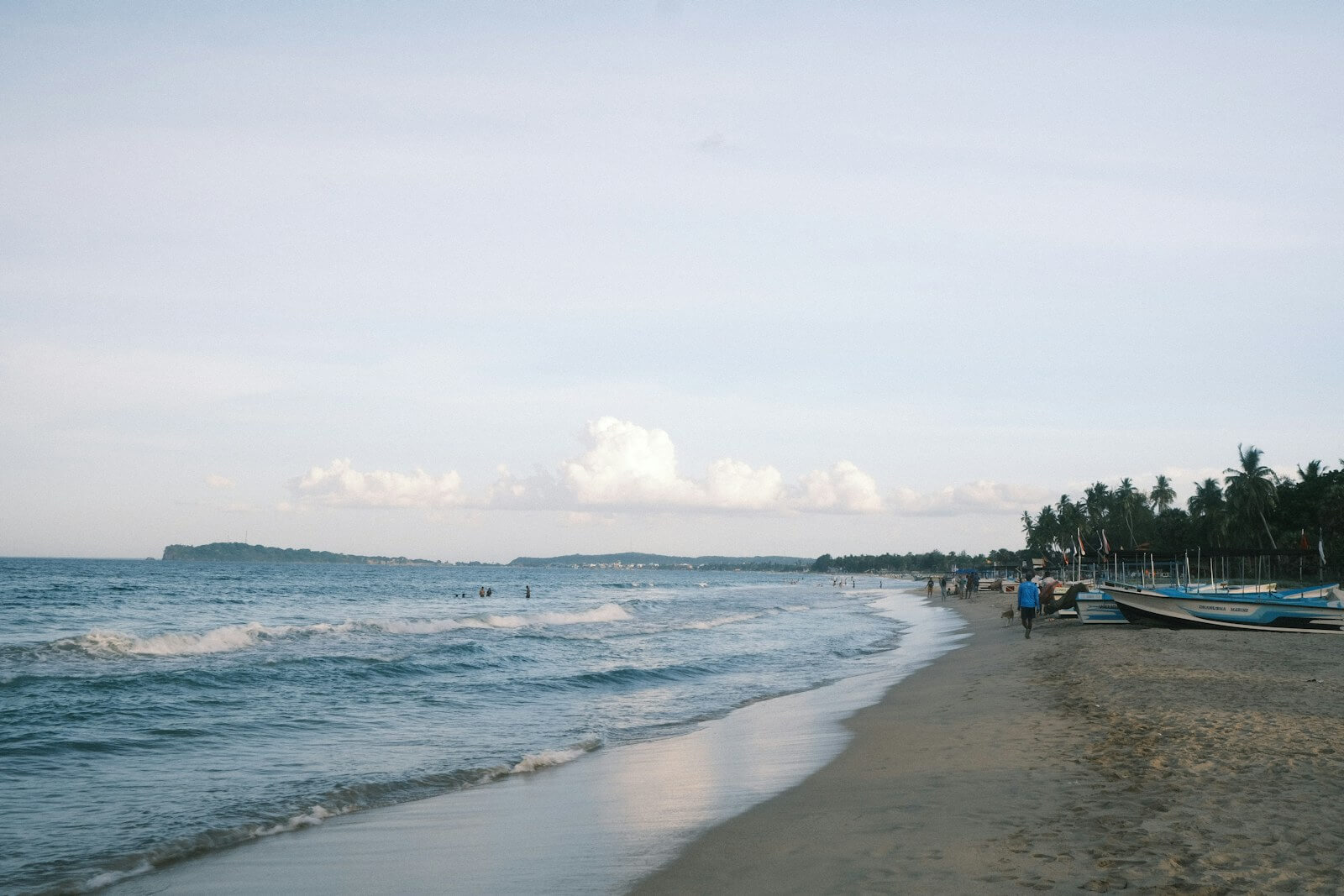
East coast: choose the beach experience you want
Trincomalee-area beaches, Pasikudah and Arugam Bay are starting points for different kinds of stay. Use the official tourism overview to locate them, then ask what is realistically available from your proposed accommodation. A surf-led holiday and a relaxed family beach holiday need different answers.
Make a simple shortlist with three columns: your preferred activity, the specific beach or departure point, and the person who can confirm conditions. For surfing, ask a suitable local school about your ability level. For an excursion, ask the operator about its operating decision and cancellation arrangements.
Do not choose an eastern base solely because a calendar recommends that coast. First establish whether you have enough time to get there, stay long enough to enjoy it and return comfortably. If a large share of the holiday becomes travel, compare a simpler itinerary.
If you are combining beaches with cultural stops, use Trodly’s Sri Lanka places-to-visit guide to shortlist interests. Then assess the connections individually rather than trying to attach every major sight to one beach booking.
What changes in April, October and November?
These months reward a different booking approach. Give greater weight to flexible excursion arrangements, covered communal space and things you will enjoy when conditions change. A beach location can still be worthwhile without a daily sea-based programme.
The official climate overview describes October–November as the island’s rainiest period overall, with widespread intermonsoon rainfall. This is a seasonal description, not a prediction that every day will be lost. Avoid both extremes: promising perfect beach days or dismissing the entire country.
For an October trip, for example, choose an appealing base and make a short list of land-based options. Keep the most weather-dependent excursion conditional. That is a planning method, not a claim that any particular activity will operate.
In April, compare your actual dates, available transfers and accommodation flexibility. Ask what happens if the outing you wanted cannot run. The useful response is a clear alternative or refund arrangement, rather than an unsupported promise that the weather will be fine.
Which forecasts should you check before a beach day?
Use the Department of Meteorology for current forecasts, advisories and its sea-weather or marine information. Check the issue date, forecast period and location. A screenshot forwarded without its date may no longer describe your plans.
Read the outlook for both your beach and any transfer route. If a warning affects your proposed activity, ask the responsible operator or accommodation what it means for that exact plan. Follow current local instructions and avoid using a general seasonal article as permission to enter the water.
Review conditions as departure approaches, then again locally before a sea activity. Keep the decision practical: what is happening, what is cancelled or modified, and what alternative still makes the day enjoyable? A fixed forecast-checking interval cannot guarantee conditions.
Three ways to build a beach itinerary around the season
A short coastal break
Choose one base that fits the season and your arrival arrangements. Separate travel time from usable holiday time. Add one or two outings that start nearby, and keep space for a slow day rather than filling every hour.
A seven-night culture-and-coast trip
As an editorial example, allocate two nights to a cultural base, four nights to one suitable coastal base and one night positioned for departure. That totals seven nights; it is not a promise that any pair of destinations connects comfortably. Test the route and rearrange nights around your flights.
A longer holiday with a hill-country stop
Add the hills because they match your interests, then check their weather and transport separately. Conditions on a favoured beach coast do not establish conditions in Nuwara Eliya. Trodly’s Nuwara Eliya guide can help you choose activities before deciding how long to stay.
Count usable beach days before adding another stop
Write down nights and full days separately. A four-night stay can contain only three full days between arrival and departure. If the first afternoon is spent transferring and the final morning begins with an early pickup, neither should be counted as a full beach day.
For example, compare four nights in one coastal base with two nights in each of two bases. The split adds a checkout, transfer and check-in to the middle of the holiday. That move may be worthwhile for a distinct experience, but it needs to earn its place in the itinerary.
Let each traveller name one priority before making that decision. Someone wanting a relaxed hotel stay and someone wanting daily excursions may prefer different pacing. Agree on the shared essentials, then leave optional time. This makes the plan useful even when weather changes one activity.
Questions to send your hotel before booking
- Which exact beach does the property face, and what access does it provide?
- Who gives current local advice about swimming and planned water activities?
- Which excursions are operating during my dates, and where do they depart?
- What happens to payments when weather prevents an outing?
- What enjoyable alternatives are available without a long transfer?
- How will airport or railway pickup work with my actual arrival?
Compare written answers, not just photographs. A pool, sheltered seating and convenient local outings may matter more to your group than an ambitious excursion list. For a broader holiday outline, start with Trodly’s Sri Lanka travel guide, then use this calendar to refine the coastal section.
Sri Lanka beach-season FAQs
Which coast should I investigate for Sri Lanka in August?
The east is a useful first shortlist during the broad May–September seasonal window. Check the exact beach, transfers and intended activity. A favourable coastal season does not establish safe swimming conditions on a particular day.
Is December a good starting point for the south coast?
Generally, yes: south and west are sensible regions to investigate for a beach-focused December itinerary. Confirm local conditions and the current forecast before committing to a particular sea activity.
Is October unsuitable for a Sri Lanka holiday?
October calls for flexibility because it falls within the wetter second intermonsoon. Choose a base with appealing land-based options and avoid making the entire holiday depend on one excursion or a promise of daily beach weather.
Does less rain mean the sea is safe?
No. Rainfall, currents, swell and activity suitability are separate considerations. Check current official marine information and local instructions. Choose activities and locations appropriate to your group’s ability.
Should I visit both coasts on a one-week trip?
Compare the transfers against the time left to enjoy each base. One well-chosen coast often makes a simpler short holiday. Add a second coast only when the actual route and available days justify the move.
Featured photo: Zoshua Colah / Unsplash. Photographs used under the Unsplash License.
More from Trodly

The Best Road Trips in Sri Lanka
Missing having road trips Just the two heads sitting in a car Driving anywhere everywhere nowhere Talking nonsense that makes sense Shoving…

The Art of Slow Travel: Embrace Spontaneity and Savor the Journey for a Meaningful Experience
Embrace the art of slow travel, where you prioritize savoring the journey over racing to destinations. This mindful approach enriches your experiences…

Landing in Dubai, Colombo or Nairobi: how to stay connected on a trip from India
The UAE, Sri Lanka and Kenya are three of the easiest international trips to plan from India, and Indian travelers are a…