
Indian Rail Journeys – Old Wine in a New Bottle?
Mayank Nagar reflects on Indian rail journeys, with updated booking information and official resources for train enquiries, food and passenger assistance…
Indian rail journeys can be memorable for the scenery and the people, but practical details matter too: the right reservation, a checked train status, food arrangements and a way to report problems. Below is Mayank Nagar’s original perspective from 2014, followed by current official resources for planning a journey.
Editor’s note: First published on 21 September 2014. The essay below describes the author’s experiences and opinions at that time; it is not a current assessment of every train or station. We have corrected the language and added an updated passenger checklist after the original author bio.
Jump to current booking information and passenger help.
Indian rail journeys: a traveller’s perspective from 2014
Summer vacations ended a few weeks ago, and with them one of the three familiar travel rush periods. Things will be quieter until Diwali fever kicks in, followed by Christmas. Every year during these rush periods, thousands of us travel across the length and breadth of the country to meet our relatives or visit tourist sites to get away from the scorching heat of summer. I remember the ritual very clearly which was part of every summer vacation during my school years. Tickets used to be booked in advance if we planned to take the night train, or bought at the current-booking counter if we decided to take the morning one. Living in Delhi, only 300 km away from my grandparents, whom we visited every summer vacation, I did not need to make long train journeys. When I compare those days with the time of writing in 2014, a lot has changed. Unfortunately, a lot remains exactly as it was almost 15 years earlier, when these journeys were a frequent affair for me.
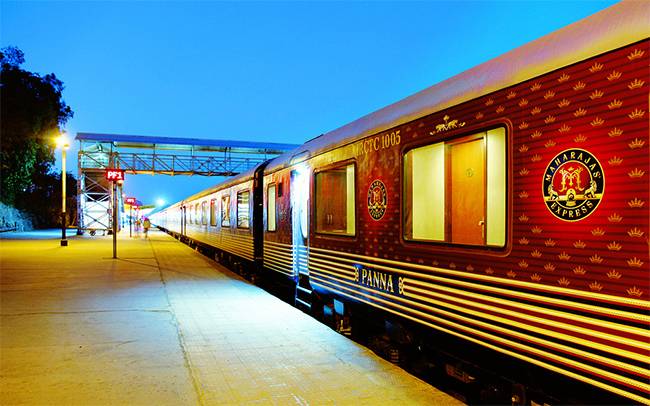
Source: www.flickr.com/photos/14589121@N00/4808584361
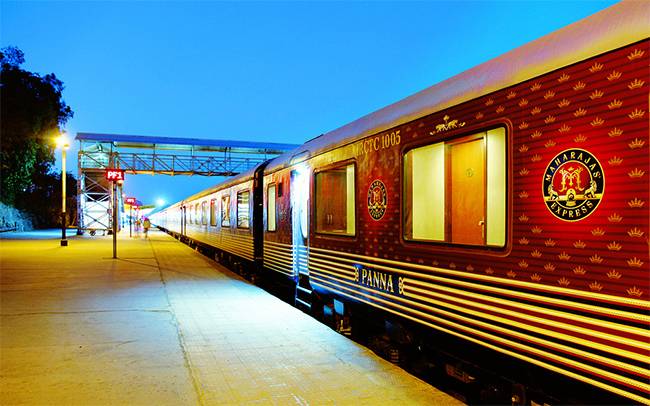
Although Indian Railways offers some of the best luxury train rides in the world, the overall state of its services still leaves much to be desired in this 2014 account.
We have developed a lot as a nation in the preceding 15 years. The middle class has substantial purchasing power, making many MNCs drool with greed, and that is evident in the way we travel too. If you compare the infrastructure the Railways has at the time of writing with what it had two decades earlier, things seem to have changed for the better. The platforms are cleaner (at least in major cities), the stations have proper toilets and drinking water facilities with some even having much better retiring rooms, multi-cuisine restaurants, elevators/escalators, proper parking, better displays on platforms etc. Reservation systems have improved by leaps and bounds and computerisation of even the small stations has made it very easy to get a ticket. However, all this seems useless at times when you actually start a journey.
Read: Top 10 Train Journeys of India You Should Not Miss
Suppose you get a nice packet of chocolate, wrapped in the finest paper and packed beautifully. When you eat it, the taste is nowhere near as good as the packaging. Will it matter to you that it was packaged nicely? I know the feeling you will have at that time: it’s one of being cheated. You were shown a product which looked beautiful. However, the moment you got to the core product, it turned out to be substandard. I think this is exactly the case with the Railways at the moment. When you read the list of positives I mentioned above, it looks as though things have changed entirely for the better. However, when we experience the actual service, it seems that the truth is similar to many government plans and schemes which exist only on paper.
Booking and the passenger experience
The ordeal starts with the booking of a ticket on the railway website, which takes an eternity to load during peak times. The alternative is to go to the ticket counter at the station, but that can mean joining a queue early in the morning. At busy times, AC coaches can be fully booked while seats remain in non-AC coaches. That makes you wonder: why can’t the Railways increase the number of AC coaches and reduce the non-AC ones? It is a tempting thought when more travellers can afford AC fares, but let me address that point a little later.
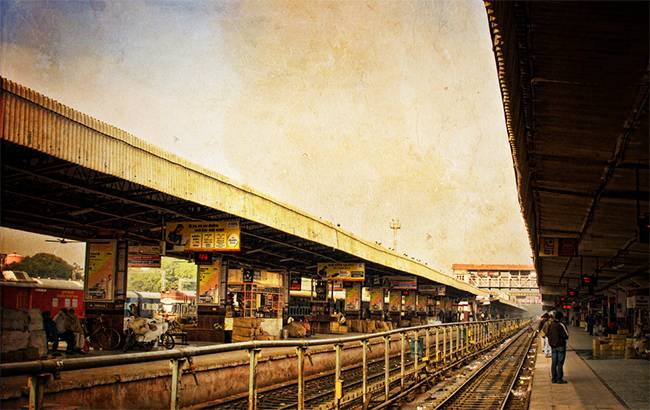
Source: www.flickr.com/photos/andy_morris/5475383961
Dirty stations, trains and toilets were among the problems highlighted in the author’s 2014 account.
At the station and on board
Assume that you have booked a ticket successfully and the date of your journey has arrived. You reach the station thinking of all the good things which are now in place as mentioned above, but then to your horror you realize most of them don’t work or are only partially available. Let’s, for a moment, set aside the crowded elevators and escalators. What stops a restaurant at the station from serving better food, or the toilets from being cleaner? You hesitate to drink the water available on the platform and immediately buy a bottle of water. You feel more secure because it comes in a sealed bottle, but then find that you have paid more than the printed MRP.
Things don’t improve once you board the train, and they can get worse if your journey exceeds 12 hours and you have to eat three square meals served on board. You pay a price that could buy you a decent meal in a decent place, but find little to enjoy about these meals. On multiple occasions, I had to request (read: beg) the coach attendant to provide the full set of bedding included in my fare. I doubt I am the only one who has had this experience. On those journeys, clean toilets too often seemed to exist only on paper rather than in the coach.
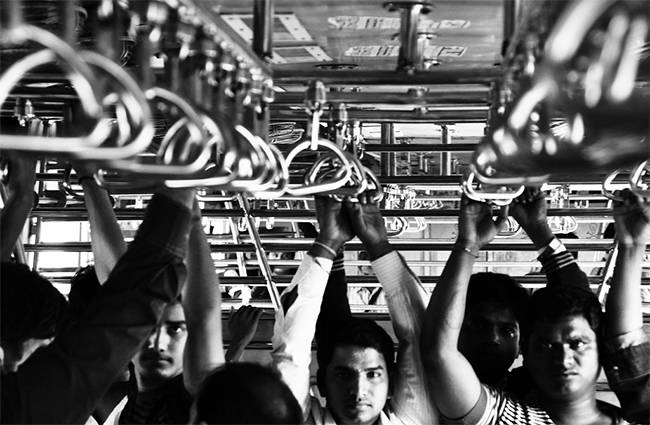
Source: www.flickr.com/photos/kholkute/5332925014
Railways remain a preferred mode of travel for millions.
After going through this journey, when you get down at the platform, which boasts of cleanliness, multi-cuisine restaurants, drinking water and many more basic amenities, you get the same feeling as you would after eating the chocolate mentioned above. Does it matter if there is a mall on the station where you can go and shop for one hour before taking up the 24-hour journey where you will keep on suffering due to lack of basic facilities? After reading all this, you might even say, “Why are you making a fuss? Train journeys are supposed to be like this.” Some may even enjoy it as an adventure. If that’s the case, then sadly you have been bitten by the mediocrity bug which is very commonly found in India.
The basics still matter
Finally, what is the solution to all these issues? Should we accept them, as we have done for so many years, or does something need to be done? I guess it’s time to understand the basic issue here and let me get back to the point made earlier about increasing the AC coaches and reducing the non-AC ones. There are still millions who can’t afford AC coaches, and many travellers who do not have access to a reserved seat. The first priority is to ensure that this service reaches these people; multi-cuisine restaurants can wait. We also need to get out of our mindset of assuming inferior and mediocre service in the trains, raise complaints about these incidents and inform the authorities. We don’t need luxuries while we travel, but just the basics which can make us comfortable and make the journey enjoyable.
–
Mayank Nagar

About the author (original 2014 bio)
Mayank is an IT consultant by profession and a traveller – sometimes by choice and other times by sheer necessity. Mayank has travelled extensively in India and Europe. Having experienced a lot of issues, he tries to highlight them so that at least someone takes notice.
Planning an Indian rail journey now
The essay’s central point remains useful: attractive stations are only one part of a journey. For a trip today, check the actual train, class, boarding station and services rather than treating an old experience—or a description of another train—as a promise about yours.
How far ahead can you book a train in India?
The standard advance reservation period is 60 days, excluding the day of travel, following the change effective from 1 November 2024. Some trains have shorter booking windows. Check your train and date on IRCTC’s official booking website; the Ministry of Railways announcement explains the general rule and exceptions.
Choose the class and journey that suit your budget, and check availability before committing to connecting plans. Fares vary by train, class, date and applicable charges; use the fare shown for your actual booking rather than a price quoted in an old article. Check cancellation conditions before paying.
What should you check before leaving for the station?
- Recheck your PNR, boarding station, departure date and ticket status. Keep your ticket and the required identification accessible.
- Use the official Indian Railways passenger enquiry website for PNR, timetable and fare enquiries, and follow its National Train Enquiry System link for running information. Confirm the platform through station displays and announcements.
- Check what your particular class and train provide. Do not assume that meals, bedding, charging facilities or other amenities are identical across services.
Can you order food for a train journey?
IRCTC eCatering lets you enter your PNR to see participating restaurants and delivery stations for your journey. Availability depends on the route and station. Check the menu, delivery details and order confirmation rather than assuming that every train or stop is covered.
Keep drinking water and any food you need between planned meals with you. For packaged products, check the seal and printed price, and ask for a bill if you are overcharged.
How do you report a railway service problem?
Use RailMadad, the official railway grievance portal, or call 139 for railway assistance and complaints. Keep your PNR or ticket details, train number, coach and berth, and a clear description of the problem ready. Save the complaint reference so you can track it. Reporting a problem does not guarantee a particular response time.
More rail journeys to explore
If the journey itself is part of your holiday, see Trodly’s 10 scenic Indian train journeys. For a heritage railway trip, use our India heritage railways guide to understand the routes and plan the ride.
Last updated: . Original essay published 21 September 2014. Grammar, historical context, booking information and official passenger resources reviewed.
More from Trodly
Must Visit Buddhist Monasteries in India
I always thought spirituality is an abstract concept. Whenever I need some time on my own, just to think things through, I…
Following Rama’s Trail: Places in the Ramayana You Can Visit
Follow Suchandra’s journey through places associated with the Ramayana, with updated place names and practical advice for planning regional visits…
10 Scenic Hill Stations in South India
Ten scenic hill destinations across Karnataka, Kerala and Tamil Nadu, with practical arrival, seasonal access and regional itinerary advice…