
Zanzibar Tides: How to Choose a Beach & Plan Your Days
Understand Zanzibar tides, compare beach settings and read local predictions. Use a seven-day planner for hotel questions, beach time and boat excursions…
In this guide
- What do Zanzibar tides change for a visitor?
- Why does the sea seem to move so far away?
- North coast or east coast: which is better for your plans?
- How do you read a Zanzibar tide table?
- A tide gauge is not the same as a holiday tide forecast
- What are spring and neap tides?
- Build a beach day around flexible blocks
- Copy this seven-day Zanzibar tide planner
- Should a short stay include two beach bases?
- Ask these questions before choosing a beachfront hotel
- Zanzibar tides and beach-planning FAQs
Zanzibar’s tides can change how close the sea is to your hotel, when a beach suits swimming and how boat or sandbank outings are timed. Choose your exact stretch of coast, check a dated local tide prediction and ask the accommodation or activity provider how it applies there. A high-tide time alone is not a swimming-safety forecast.
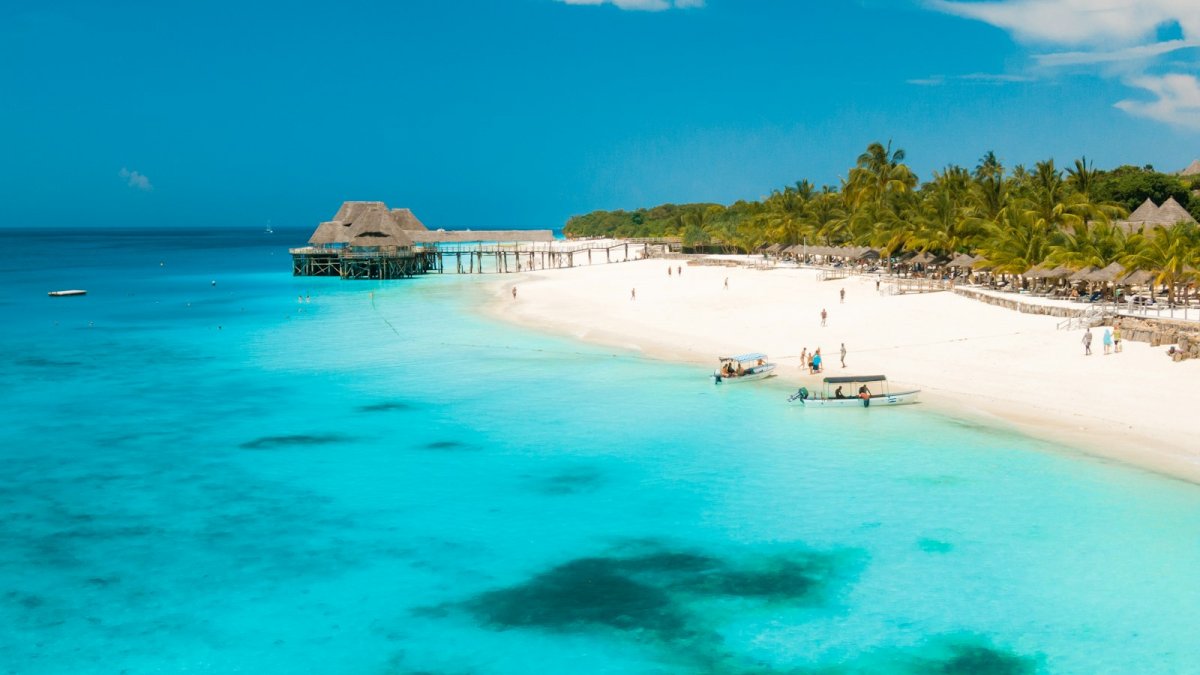
A photograph of turquoise water cannot tell you what the same beach will look like during your stay. This guide explains how to read tide information, compare beach locations and build a flexible day without treating low tide as a problem to avoid at all costs. It includes a copyable seven-day planner and questions to send before booking a beachfront room.
What do Zanzibar tides change for a visitor?
| Your priority | What to check | Useful booking question |
|---|---|---|
| Easy access to sea swimming | The actual shoreline, entry point and tide-related limitations | What is swimming like outside this hotel at low water? |
| A scenic east-coast stay | How the exposed shore changes through the day | Can you show this beach at both high and low tide? |
| A boat or sandbank outing | The operator’s timing, landing plan and conditions policy | What happens if tides or weather change the programme? |
| A family beach holiday | Supervision, shoreline access and a useful alternative activity | Is there a pool, and what does the children’s day look like? |
| Snorkelling or diving | Conditions at the actual activity site | Who decides the safe time and whether the trip operates? |
This is an accommodation and activity checklist, not a navigational guide. Let a qualified local provider decide the conditions for a particular water activity.
Why does the sea seem to move so far away?
A tide changes water level. The visible effect depends on the shape of the shore: when a beach slopes very gradually, a vertical change can expose a wide area of sand, reef flat or seagrass. Where water deepens closer to shore, the same kind of change may expose less ground.
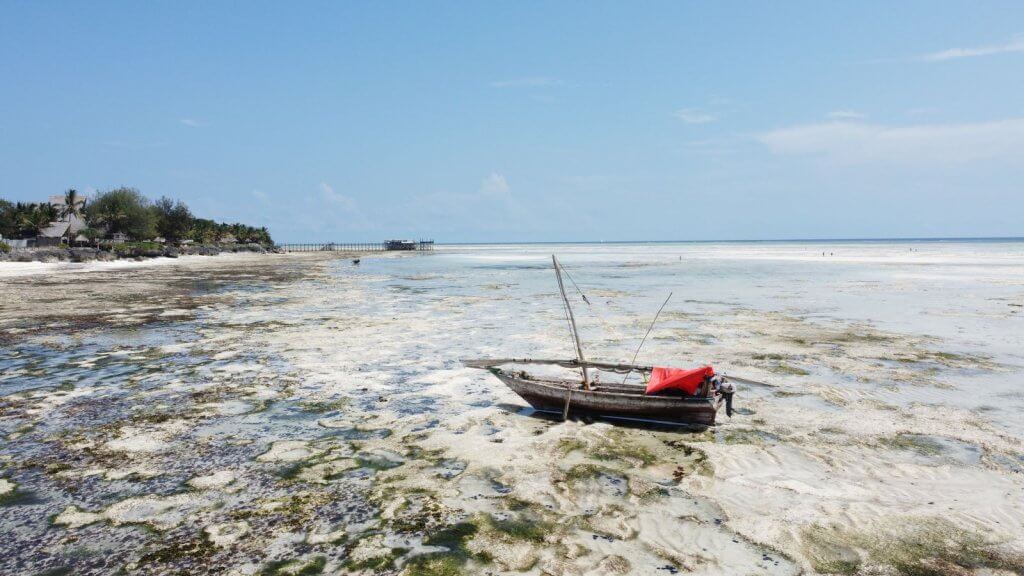
This is why an island-wide label is less useful than a question about a specific hotel. Two properties described as being on the same coast can have different entry points, channels, beach width and access arrangements. Even neighbouring stretches can feel different to a visitor.
NOAA’s explanation of tides provides the general science behind changing sea levels. For a holiday, the practical step is to combine that understanding with a local prediction and observations at the place you intend to use.
Do not judge the hotel’s beach from one arrival-day snapshot. Ask about both high and low water before booking. A retreating sea may be entirely normal at that location, while a property with a pool may suit your preferred routine very well.
North coast or east coast: which is better for your plans?
Nungwi and Kendwa in the north are often considered by travellers who prioritise convenient sea access. East-coast bases such as Paje and Jambiani are associated with visibly changing tidal flats. Treat these as broad starting points, not guarantees for every frontage.
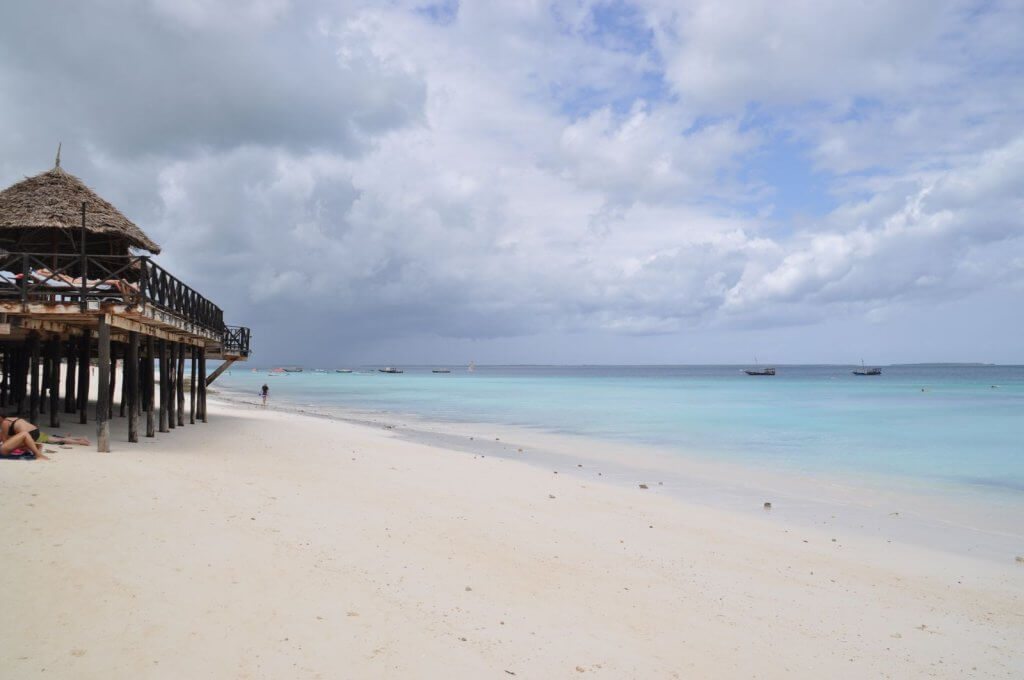
An east-coast accommodation provider, Hotel Matlai, describes the contrast between northern beaches and more exposed eastern shorelines from its local perspective. Its observations are useful context, but ask your own property for date-specific information and avoid reading any coast as universally safe to swim.
| Setting | What to investigate | Who may value it |
|---|---|---|
| Northern beach base | The particular bathing entry, boat activity and conditions on the frontage | Visitors putting convenient sea access high on their list |
| Open east-coast beach | How far the water retreats and which parts of the day fit the intended activity | Travellers happy to organise the day around a changing shore |
| Hotel with a pool | Pool size, opening arrangements, shade and suitability for the group | Families or visitors wanting an alternative when sea conditions do not suit |
| Stone Town stay | Walking routes, heritage interests and onward coastal transfer | Visitors combining the old town with a separate beach base |
Use the Zanzibar Commission for Tourism to explore the island’s wider destinations. A beach choice should also reflect the atmosphere, food options, transport and activities you want, rather than one tide-related slogan.
How do you read a Zanzibar tide table?
Begin with the location, date and time zone. A table for a different port or a different year is not a reliable plan for your beach holiday. Confirm that the displayed times use the local time expected by your accommodation and operator.
Next distinguish high-water and low-water predictions from a continuous height graph. The listed events identify predicted turning points in water level. They do not describe the depth at every point offshore or tell you how a current behaves at a particular reef entrance.
If heights appear, read the units and reference level. A predicted height is measured relative to the datum used by the table; it is not automatically the depth above the seabed where you are standing. Do not convert an unfamiliar height into a swimming-depth claim.
Finally, ask someone responsible for the activity to interpret the information locally. Send the table’s station name, date and time zone rather than a cropped screenshot showing only “high tide.” That lets the provider identify whether it is appropriate for the intended place.
A tide gauge is not the same as a holiday tide forecast
The IOC sea-level station catalogue records a Zanzibar station. Such a catalogue describes a monitoring location and its data connections. It should not be treated as a personalised prediction for every hotel beach.
A measured sea-level graph, an astronomical tide prediction and a weather forecast answer different questions. Measurements report what a sensor observes; predictions estimate tidal behaviour; weather information addresses conditions that can also affect a day on the water.
For practical planning, ask your hotel or licensed activity provider which dated prediction they use and whether conditions require changing it. Keep the source with your itinerary so that a disagreement about timing can be checked rather than resolved by choosing the most attractive screenshot.
What are spring and neap tides?
NOAA explains spring tides as the larger tidal ranges associated with the new and full moon. Neap tides have a smaller range and occur around the quarter-moon phases. “Spring” here is unrelated to the season of the year.
For a Zanzibar visitor, the important implication is variation within a month. A review written during one part of the lunar cycle may describe a different-looking shore from the one you see during your stay. The same hotel can receive apparently conflicting descriptions without either visitor inventing their experience.
Do not use the moon phase alone to plan a boat departure or decide whether to swim. Use the prediction for the right dates and location, then follow current local advice. Spring and neap describe the tide’s range, not a universal ranking of holiday quality.
Build a beach day around flexible blocks
Identify the activity that needs a particular tidal state and arrange the flexible parts around it. If a provider recommends a specific water-activity window, move breakfast, a village walk or a quiet afternoon to fit, rather than expecting the sea to follow a fixed hotel routine.
Leave space for lunch, shade and transfers. A boat excursion departing from elsewhere on the island includes the journey to its meeting point; the advertised time on the water is not the entire day. Confirm the actual pickup and return arrangement.
Low tide can be a good time to observe the changing landscape from shore or join an appropriately guided interpretation activity. Respect reef habitats, seagrass areas and local working beaches. Do not remove wildlife for photographs or walk across unfamiliar exposed areas simply because they appear reachable.
Keep an alternative that you will enjoy: a pool, a food-focused outing, reading or a heritage visit. The point is to build a satisfying holiday with choices, not to treat every hour outside your preferred swimming window as wasted.
Copy this seven-day Zanzibar tide planner
Complete the planner using the local prediction recommended for your property. Fill it in before scheduling optional excursions, then recheck the provider’s instructions close to the activity date.
| Holiday day | High/low times and source | Locally advised activity window | Flexible alternative |
|---|---|---|---|
| Day 1 / arrival | Record date, station and time zone | Keep arrival expectations light | Hotel orientation or a short local walk |
| Day 2 | Enter the dated prediction | Confirm with the property | Meal or pool time |
| Day 3 | Enter the dated prediction | Confirm any excursion pickup | A land-based activity |
| Day 4 | Enter the dated prediction | Keep the water activity conditional | Rest or a local visit |
| Day 5 | Enter the dated prediction | Recheck the operator’s plan | Pool or a flexible meal outing |
| Day 6 | Enter the dated prediction | Leave room for a changed excursion | A preferred low-effort activity |
| Day 7 / departure | Record only if relevant | Protect checkout and airport transfer | Pack and depart without rushing |
This is a blank planning template, not a tide forecast. It intentionally contains no invented high-water times or island-wide swimming windows.
Should a short stay include two beach bases?
For a short Zanzibar extension, changing hotels can consume time through checkout, packing, transport and waiting for the next room. Compare that cost with the benefit of experiencing another coastline. A different-looking beach is worthwhile only if you have time to enjoy it.
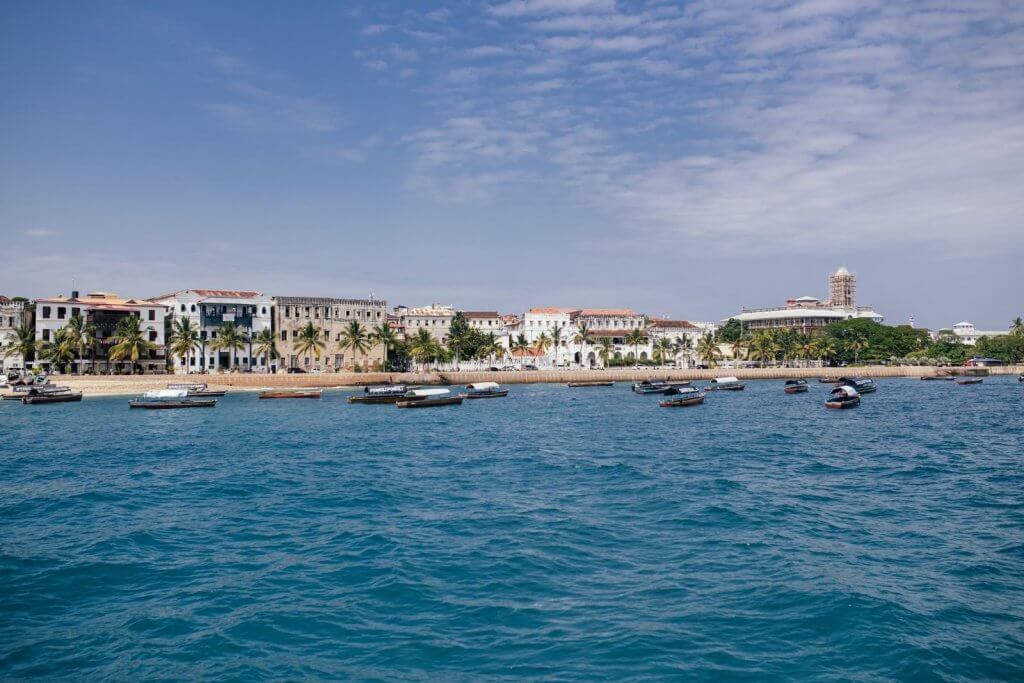
Before splitting the stay, write down the usable days at each base and the activity you want there. A two-night booking between a late arrival and an early departure may provide just one substantial day. Avoid spending that day moving simply because two village names appear on a shortlist.
For a longer visit, a split can make sense when the bases serve distinct priorities. Confirm transfer arrangements and keep at least part of moving day flexible. Tide planning should help your holiday work, rather than create another rigid series of appointments.
Ask these questions before choosing a beachfront hotel
Request recent photographs of the actual frontage at high and low tide, the normal sea-entry point and the dated information used for your stay. Ask whether the beach is reached directly, by steps or through another access route.
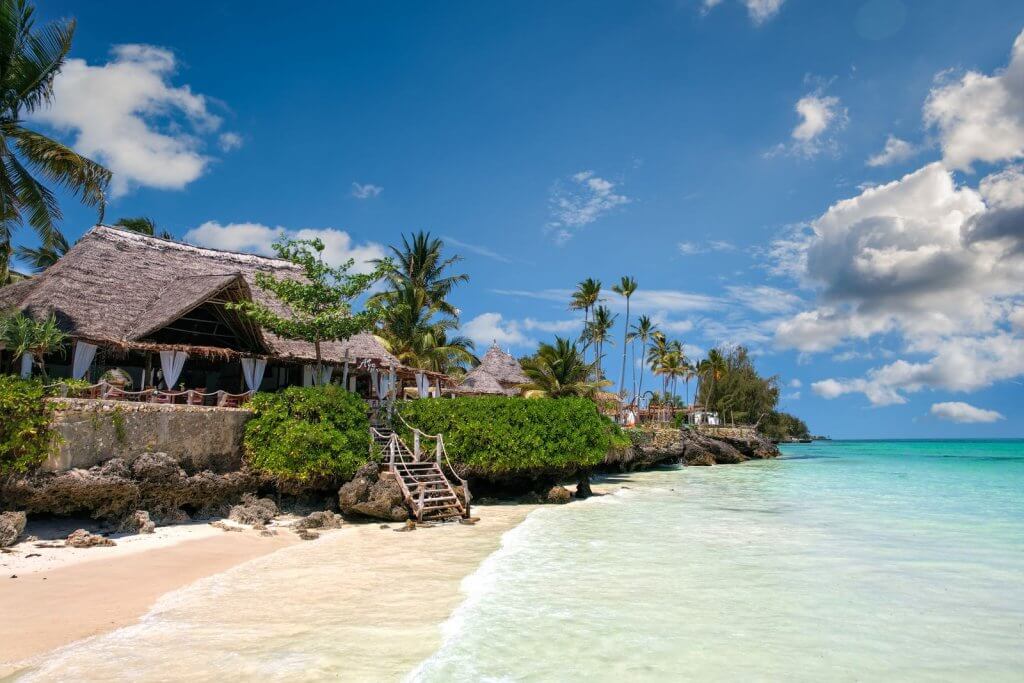
For families, confirm supervision arrangements, shade and the pool’s suitability. For anyone with mobility needs, discuss the surface between the room, beach and water. “Beachfront” describes a location; it does not certify accessible entry or a supervised bathing area.
For boat, snorkelling or sandbank excursions, ask about the named departure point, participant requirements, equipment, cancellation terms and who makes the final operating decision. An accommodation recommendation and a confirmed activity booking are different things.
If Zanzibar follows a mainland safari, reserve the first beach day lightly. Camp checkout, airstrip transfers, flights and the drive to the hotel can reduce usable time. Trodly’s Tanzania overview helps place the beach stay within the wider trip; plan each transfer before adding another excursion. Pairing the island with a Kenya safari instead? Our guide to Maasai Mara reserve and conservancy stays explains how to compare bases and plan a split stay.
Related reading on Trodly
- Sri Lanka beach weather by month: east, south or west coast? applies the same coast-by-coast approach to another Indian Ocean island.
- Top hotels and safari lodges to stay in Kenya includes beach stays on Kenya’s Indian Ocean coast, such as Diani.
- Our Kenya travel overview helps if you are pairing a safari with an East African beach stay.
Zanzibar tides and beach-planning FAQs
Is the best time to swim always high tide?
No universal safe-swimming rule follows from high water alone. Beach shape, waves, currents, access and supervision matter. Ask the responsible local provider about the actual location and conditions.
Are Nungwi and Kendwa tide-free?
Avoid that absolute description. They are often considered for convenient sea access, but tides and changing conditions still exist. Check the exact frontage instead of treating a village name as an all-day swimming guarantee.
Does low tide make an east-coast hotel a bad choice?
Not necessarily. It changes the shoreline and daily routine. A visitor who enjoys the landscape, flexible activities and an appropriate pool may value the stay. Decide using your own priorities and the property’s actual location.
Can I use a Zanzibar harbour table for every beach?
Do not assume its predictions describe every beachfront or activity site in the same way. Check the station, time zone and dates, and have the accommodation or operator explain its local relevance.
Should I book boat trips before checking tides?
Ask the operator how tides and weather affect the proposed trip before confirming. Record the meeting point, likely timing and changes policy, then keep the surrounding day flexible.
More from Trodly
11 Things to Keep in Mind While Travelling in India
Eleven practical India travel tips, updated with realistic regional advice, museum entry rules, transport checks and official visitor resources…

New Year in Goa on a Budget
It's never too soon to start planning for the new years eve. Many of you might be on the fence about whether…

Travel Itinerary Planning Hacks: Top Tips for Bigger Travel Parties
Planning a trip with a large group can be super fun, but it also requires some serious logistics management. Figuring out flights…