
How Difficult Is a Trek? An India Trekking Effort & Readiness Guide
Understand trek difficulty using walking time, ascent, altitude, terrain, weather and exit options. Compare itineraries with a practical readiness worksheet…
In this guide
- The six factors behind trek difficulty
- Why easy, moderate and difficult need an explanation
- Factor 1: compare the longest day, not the trip average
- Factor 2: count ascent and descent separately
- Factor 3: treat altitude as a separate question
- Factors 4 and 5: terrain and weather can change the same trek
- Factor 6: packs, overnight stays and exits change the commitment
- Four Indian examples: compare the itinerary, not just the place
- A readiness worksheet for your next trek
- Trek difficulty FAQs
Judge a trek’s difficulty by its longest walking day, total ascent and descent, maximum and sleeping altitude, terrain, expected conditions, and the load and exit arrangements. An “easy” or “moderate” label is only a starting point. Compare the actual itinerary with the walking you can comfortably repeat and the conditions you have experienced.
Two trips to the same place can demand very different effort. A road-assisted viewpoint visit, a long walking approach and a multi-day trek may share a destination name while offering different challenges. This guide gives you a way to read itineraries and ask useful questions before booking. It is an editorial comparison framework, not a fitness test or a certificate that a route is suitable for every traveller.
The six factors behind trek difficulty
| Factor | Information to request | Why a short label misses it |
|---|---|---|
| Walking day | Longest day, expected moving time and time including breaks | An average hides the most demanding day |
| Ascent and descent | Total climb and descent for each day | Start-to-finish height difference omits repeated ups and downs |
| Altitude | Highest point, sleeping altitudes and approach schedule | A short walk can still take place at high elevation |
| Terrain | Steps, loose ground, steep sections, exposure and crossings | Equal distances can demand different skills |
| Conditions | Season, recent trail condition and required equipment | Rain, snow or heat can change the same route |
| Load and logistics | Your carried load, overnight arrangement and exit options | Pack weight and limited exits change the commitment |
Use the table to compare the specific departure you are considering. Do not assign a numerical safety score from these factors. One substantial mismatch—such as unfamiliar exposed terrain or an unsuitable altitude schedule—can matter more than several comfortable features.
Why easy, moderate and difficult need an explanation
A grade is most useful when its author explains what it measures. One operator may use “easy” for walking terrain without technical climbing; a first-time trekker may read it as a short, effortless outing. Ask what the label means in daily walking, terrain, altitude and support, rather than assuming both descriptions use the same scale.
Read the complete day-by-day itinerary. Identify the first walking point and the final destination each day. Check whether a drive shortens the approach, whether the summit is optional and whether the descent occurs on the same day. Those details can change the effort substantially while the trip title remains the same.
For an organised trek, establish who the intended participant is. “Suitable for beginners” may mean a beginner who already walks regularly and can handle successive days outdoors. It does not necessarily mean someone who has never completed a long walk. Ask about preparation expectations in ordinary terms you can assess.
Use route-specific guides for the details after choosing the type of trip. Trodly’s India trekking shortlist can help you find regions and trails. This framework helps you compare the effort required by the actual programme, rather than treating a destination list as a personal readiness assessment.
Factor 1: compare the longest day, not the trip average
Find the day that asks the most of you. A three-day itinerary can contain two modest stages and one very long ascent-and-descent day. Dividing its total distance by three hides that demand. Record the longest day separately and look at the sequence of days leading to it.
Ask whether the quoted time is moving time or includes breaks. A walker’s pace changes with slope, terrain, group size and conditions. A broad time estimate can be a useful planning aid, but it should not become a deadline that pushes you to rush. Leave the operator’s turnaround and group-management decisions to the person responsible for the trip.
Compare that day with a walk you have actually completed, including how you felt afterward. A city distance on flat pavement is a partial reference, not an equivalent mountain performance. Note whether the practice walk involved steps, hills, a pack or uneven ground.
For a multi-day itinerary, ask what happens after the longest day. An evening transfer, a difficult descent or another early start may affect the overall experience. Recovery time matters to enjoyment as well as pace. A route that fits a relaxed itinerary may be less suitable when compressed into fewer days.
Factor 2: count ascent and descent separately
Altitude is the height of a place above sea level; ascent is the amount you climb along the route. If a trail goes uphill, downhill and uphill again, subtracting the starting altitude from the finish can underestimate the total climbing. Request the day’s cumulative ascent rather than only the endpoint heights.
Descent deserves its own line. A long downhill stage is not automatically a rest period. Steps, loose ground and repeated braking can make the return feel very different from the climb. If the programme combines a summit ascent with a large descent, assess both parts when judging the longest day.
Ask where the steepest sections occur. A demanding finish after several hours of walking differs from an early climb followed by a gentle afternoon. If you are travelling with others, compare the itinerary against the person who needs the most time, rather than assuming the fastest member sets the plan.
When a programme lacks these details, ask for clarification before comparing it with another trip. A provider does not need to supply a scientifically precise measurement of every metre to explain where the main effort lies. It should be able to describe the day honestly enough for you to make a sensible choice.
Factor 3: treat altitude as a separate question
Walking stamina and an appropriate altitude itinerary are different checks. The CDC’s high-altitude travel guidance recommends gradual ascent and attention to sleeping elevation. Review the approach schedule as well as the highest point. People with relevant medical conditions should discuss the actual itinerary with a clinician before high-altitude travel.
Write down where you sleep each night and how you reach the first high location. A summit’s elevation alone does not describe the trip. Driving rapidly to a high starting point and then walking is different from approaching gradually over several days. Ask how the itinerary allows travellers to adjust.
Do not turn this factor into a competition about who is fittest. The useful questions are whether the schedule is appropriate, how the guide checks participants and what the response is if someone becomes unwell. Ask about communication and access to help in the actual area, rather than accepting a generic “emergency support” phrase.
If altitude illness develops, the CDC advises against further ascent while symptoms remain; worsening symptoms while resting require descent. Serious symptoms need urgent help. Follow the trip leader’s response and seek medical assistance rather than treating symptoms as ordinary tiredness to push through. Do not copy medication advice from another traveller’s experience.
To apply these questions to a Himalayan itinerary, read the Bhrigu Lake trek guide and Hampta Pass trek guide. Compare the proposed daily ascent, overnight altitude and longest walking day, then confirm the actual itinerary with your organiser.
Factors 4 and 5: terrain and weather can change the same trek
Ask what the walking surface is like and what skills it requires. A wide stepped path, a loose hillside and an exposed narrow section are different experiences even when they cover the same distance. Find out whether any section needs equipment or abilities beyond ordinary walking. An attractive photograph rarely supplies that information.
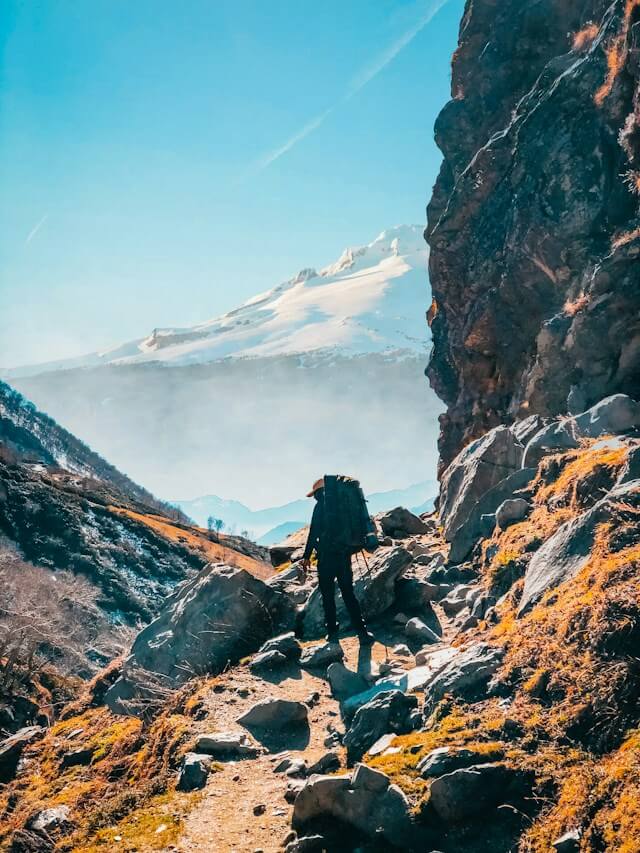
Check the condition expected for your departure, not simply the most popular season. Rain can change traction and visibility; snow can change navigation and equipment needs. Ask the organiser what recent information it is using and how it decides whether to alter the route. A dry-season description should not be reused as a guarantee for every month.
Separate the route from optional extensions. A straightforward main walk may be advertised alongside a more demanding summit, ridge or pass. Establish which parts are included, which are conditional and whether opting out is possible within the group’s arrangements. A headline destination can hide an additional objective.
For a first trek, choose conditions and surfaces that give you room to learn. Familiar terrain with a sensible day length is often a more useful start than a famous route selected because its marketing label says “easy”. Build experience progressively rather than making the first outing depend on several unfamiliar demands at once.
For seasonal and regional route ideas, compare our winter treks in India with treks around Mumbai and Pune. Use those guides to shortlist routes, then check present conditions and equipment requirements for your exact departure rather than relying on a difficulty label alone.
Factor 6: packs, overnight stays and exits change the commitment
Check exactly what you carry yourself. A daypack with personal items is different from carrying overnight equipment and food. If luggage support is advertised, ask where it operates and which items remain with you. Your required load should be part of the preparation plan, not a surprise at the trailhead.
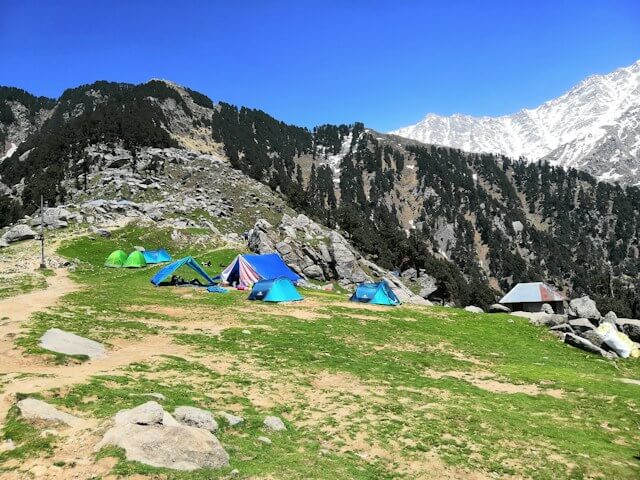
Understand the overnight arrangement. A hotel-based walking trip, a supported campsite and a self-carried camp create different routines. Ask about meals, water, toilets, bedding and equipment. Those details affect both comfort and how much energy you have for the next day.
Ask where an early exit is realistically possible. An out-and-back walk may offer a simpler return decision than a route crossing into another valley, but the actual trail and support determine what is feasible. Do not assume you can leave a guided group at any point and find a vehicle nearby.
Agree how the group is managed when walking speeds differ. Useful answers explain who accompanies slower participants and what happens if someone turns back. “We will manage” is less informative than a clear description of guides, communication and the day’s decision points.
Four Indian examples: compare the itinerary, not just the place
| Example | Source-backed distinction | What to ask before choosing |
|---|---|---|
| Mullayanagiri, Karnataka | A road-assisted final approach differs from the longer Sarpadhari walking trail | Exact start, steps or trail, return and transport |
| Triund, Himachal Pradesh | The Galu Temple approach has a more demanding final section | Starting point, longest day, descent and any optional extension |
| Nag Tibba, Uttarakhand | The tourism itinerary uses a two-day approach from Pantwari | Actual camp, summit day, descent and your carried load |
| Valley of Flowers, Uttarakhand | A valley visit from Ghangaria is part of a wider approach itinerary | All walking stages, altitude schedule, accommodation and return |
The examples draw on Karnataka Tourism’s Mullayanagiri description, Himachal Tourism’s Triund information, and Uttarakhand Tourism’s Nag Tibba and Valley of Flowers itineraries. They illustrate why approach and schedule matter; they do not assign universal grades or confirm current permissions.
At Mullayanagiri, asking only whether you will reach the summit misses the main effort distinction. Establish whether the outing is a road-assisted visit with final steps or a longer walking approach. The same destination name can fit a sightseeing day or a trek, depending on the starting point.
For Triund, compare the approach, the return and any extension separately. A walk to Triund should not automatically be treated as preparation for a higher pass. Read Trodly’s Triund route guide for destination context, then check the current departure’s arrangements and local permissions with the provider.
For Nag Tibba and Valley of Flowers, read the whole programme rather than the headline walking day. The two-day structure, the approach to a base, overnight arrangements and the return all affect your experience. A beautiful valley photograph does not communicate the effort required to reach the base from which the valley is visited.
A readiness worksheet for your next trek
| Question | Your note | Detail still needed |
|---|---|---|
| What comparable walk have I completed recently? | ||
| What is the longest day in this itinerary? | ||
| How much ascent and descent does that day contain? | ||
| What are the highest point and sleeping elevations? | ||
| Which terrain or conditions will be unfamiliar? | ||
| What load will I carry, including personal essentials? | ||
| How are pace differences, turnarounds and exits handled? | ||
| What must I practise or clarify before committing? |
Fill this in with concrete observations, not a yes/no confidence score. Practice walks can reveal footwear discomfort, an awkward pack or difficulty with sustained steps before the trip. Build your preparation around the actual demands you have identified, with time to adjust equipment and plans.
If the answers remain unclear, choose a simpler outing or request a fuller itinerary. The aim is to match a trip to your current experience while leaving room to develop it. Returning from an enjoyable first trek is a better foundation for future travel than selecting the hardest famous name you can find.
For shorter regional choices, explore Trodly’s hikes around Bangalore or Karnataka trekking ideas. When comparing organised experiences, use the worksheet alongside the provider’s current inclusions and route description.
Trek difficulty FAQs
Does beginner-friendly mean no preparation is needed?
No. Ask what walking ability and experience the organiser expects. A trip without technical climbing can still involve long days, steep descent or altitude. Compare its actual demands with your recent walking experience.
Is distance enough to judge a trek?
No. Time, ascent, descent, altitude, terrain, conditions and logistics all matter. Two walks of the same length may require very different effort. Start with the longest day and assess the other factors around it.
Is a downhill return easy?
Not automatically. A long descent on steps or loose ground can be demanding. Record descent separately, especially when it follows a summit climb. Practise suitable downhill walking as part of preparing for the actual route.
Can I use one operator’s moderate grade for another operator’s trip?
Only after comparing what each grade measures and the actual itineraries. Starting points, day lengths, pack support and optional extensions may differ. The route title alone does not make the programmes equivalent.
Should I choose a famous Himalayan trek for my first outing?
Choose from the demands you can reasonably meet, rather than fame. A shorter walk with familiar terrain and clear support may be a useful first step. Assess any high-altitude programme separately and clarify its approach and sleeping schedule.
If you are considering an organised Himalayan trip, compare the actual itineraries on Trodly’s Manali activities. Ask the provider about the longest day, conditions, support and exit arrangements before choosing. A booking page’s inclusions should answer these questions rather than relying on the difficulty label alone.
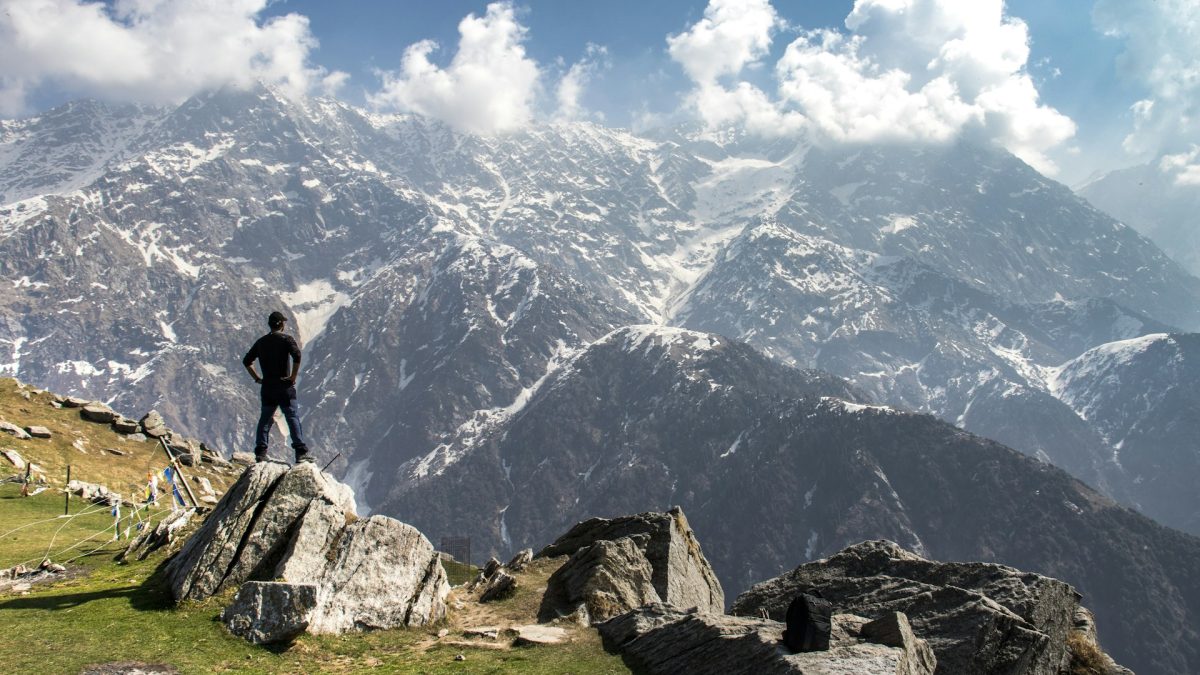
Featured photo: Hiker standing on a rocky viewpoint above green mountain slopes at Triund. Shashank Verma / Unsplash.
More from Trodly
10 Best Places to Visit in India This December 2018
The cool breeze, the hazy atmosphere the romance in the air and the period of festivity and vacation, AHHH it’s just all…
Triund Trek – A Complete Guide to Trekking & Camping
Triund Trek is a perfect getaway to the heights in McLeodganj. Situated between the Dhauladhar Mountains and Kangra valley, Triund Trek is…
11 Things to Keep in Mind While Travelling in India
India is a place like no other; it is a country but nothing less than a continent in itself. India is a…